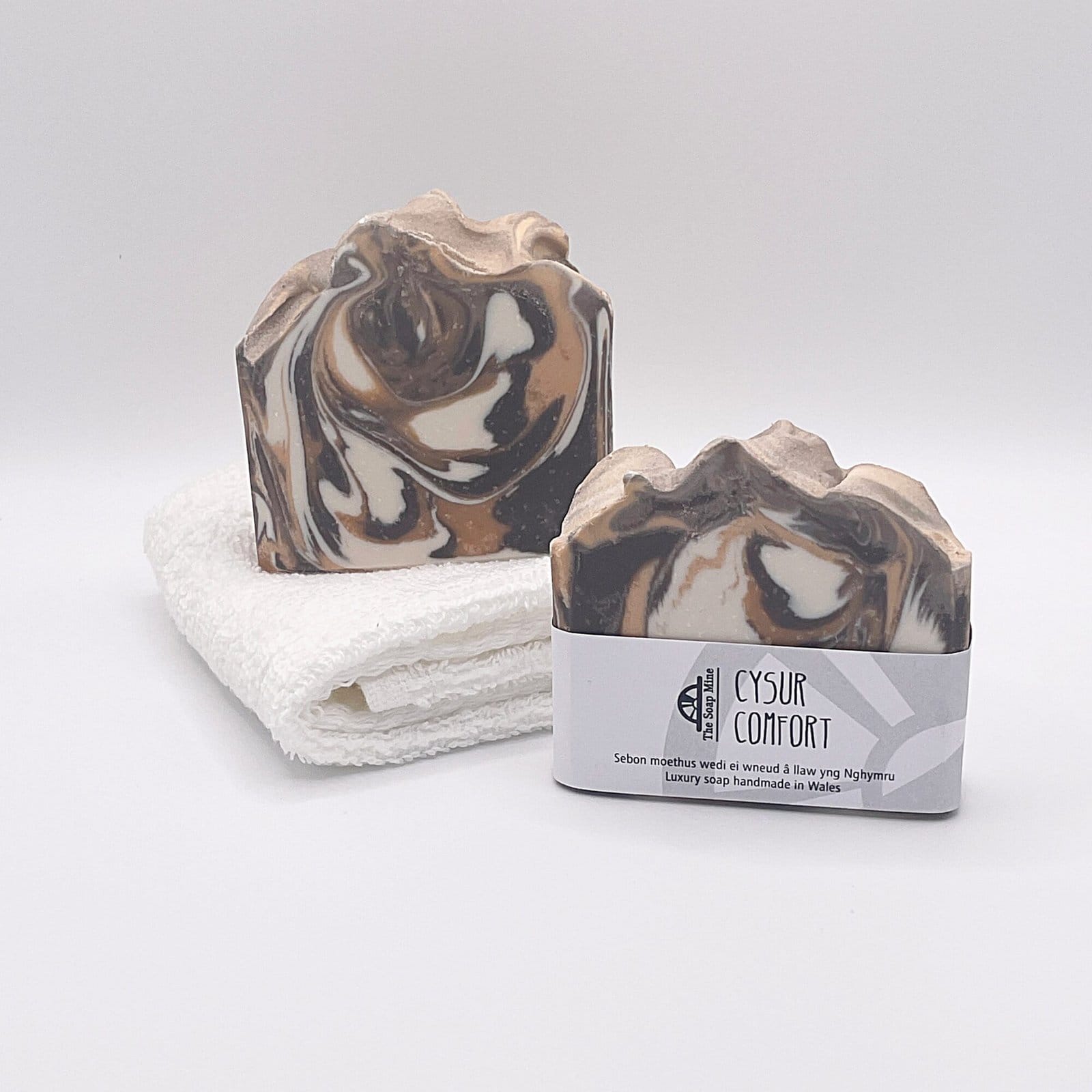
Let’s not beat around the bush. You can walk into a supermarket and pick up a bar of soap for considerably less than the price of one of my handmade bars. So why the difference? Is handmade soap really worth paying more for, or are you just paying extra for pretty swirls and fancy fragrances?
Well, those are certainly part of the appeal, but there’s quite a bit more going on behind the scenes.
And as somebody who spends an extraordinary amount of time making soap, I thought I’d explain where some of that extra cost comes from.
First, the ingredients
Traditional cold process soap is made using oils and butters, and the particular combination used has a significant effect on the finished bar.
At The Soap Mine, I use ingredients including olive oil, coconut oil, shea butter and cocoa butter, carefully balancing their different properties to create the kind of soap I want to make. Each ingredient has a purpose, whether that’s contributing to hardness, lather, cleansing or how the finished bar feels on your skin.
These ingredients aren’t cheap. In fact, some have become considerably more expensive over the last few years.
Take olive oil, for example. Between 2021 and 2024, the price of olive oil in the UK rose dramatically, largely because of poor harvests and drought conditions in major producing countries. At one point I was paying almost £60 for a 5ltr bottle that once cost me just £15. Although prices have eased from their peak, they’re still almost twice what they were five or six years ago.
And then there’s cocoa butter. If you thought olive oil prices were bad, the cocoa market has been on a rollercoaster of its own. Poor harvests, plant diseases and unfavourable weather in major cocoa-producing regions sent prices soaring, with cocoa butter reaching extraordinary wholesale prices in late 2024.
Those prices have since fallen somewhat, but the volatility has made planning ingredient costs rather interesting, to put it mildly.
When you make soap in relatively small quantities, increases like these make a noticeable difference. I can’t simply absorb every rise indefinitely, nor do I have the buying power of a multinational manufacturer.
Making soap takes time
If you’ve been following Blogtober, you’ll know that making a batch of cold process soap involves considerably more than mixing a few ingredients together.
There’s weighing, melting, mixing, colouring, fragrancing and pouring. Then there’s unmoulding, cutting, arranging the bars in curing baskets, checking them, wrapping and labelling. And, of course, my personal favourite, the washing-up. None of those jobs happens by itself, and in my business, I’m the person doing all of them.
When you buy a handmade bar, you’re paying for some of the time and skill involved in producing it, as well as the physical ingredients.
Then there’s the curing time
My cold process soaps need around four to six weeks to cure before they’re ready for sale.
During that time, the bars are taking up space in the workshop, and I’ve already paid for the ingredients and spent the time making them. But I can’t sell them yet. That means I need enough room to store several weeks’ worth of production, as well as enough money tied up in ingredients and curing stock to keep the business running.
Large manufacturers can use production methods and equipment that allow them to process soap much more quickly. My traditional cold process soap relies on time to develop into the hard, long-lasting bars I want to sell. And unfortunately, the curing racks don’t contribute anything towards the electricity bill while they’re sitting there. Very inconsiderate.
Safety assessments and the less glamorous costs
Here’s something people don’t always realise. Handmade soap sold for washing your skin is, legally, treated as a cosmetic product, and in the UK it has to comply with cosmetic safety regulations. That means appropriate safety assessments, product documentation, manufacturing records, compliant labelling and all sorts of other requirements.
And they apply whether you’re a multinational cosmetics company or a tiny business operating from a workshop in Gwynedd.
Then there are all the other everyday expenses: packaging, equipment, insurance, website costs, payment processing fees, electricity, replacement tools and the many other costs of running a business.
Some are quite small individually, but they soon add up. And not none of them can be paid with compliments about how lovely the soap smells. I’ve checked.
How can supermarkets sell soap so cheaply?
There are two big reasons: ingredients and economies of scale. And I think they’re equally important.
Many of the big brands that manufacture traditional soap use palm oil and palm kernel oil as major ingredients. They’re widely available, relatively inexpensive, and produce perfectly functional soap, but I’ve deliberately chosen to keep my recipes palm-free. You’ll also find that lower-cost grades of oils, such as olive pomace oil, are used in soapmaking, rather than the food-grade olive oil I choose for my bars.
My recipe also contains generous proportions of shea butter and cocoa butter, both of which are considerably more expensive than many of the oils commonly used in mass-produced soap. They’re not there simply so I can put something luxurious-sounding on the label. I’ve chosen them for the properties they bring to the finished bar, and they’re an important part of the formulation I spent a lot of time and effort developing.
Then there’s the question of scale. Large manufacturers can purchase ingredients in enormous quantities, often at prices unavailable to small producers, and use automated equipment to manufacture and package thousands or even millions of bars very efficiently. I buy my ingredients in comparatively tiny quantities, then make, cut, cure and wrap my soap by hand.
So while a cheap supermarket bar may do a perfectly adequate job of getting you clean, I do believe the ingredients and formulation of my soap make it a better product. And judging by the feedback I receive from customers, plenty of them agree.
Ultimately, we’re producing two rather different products, using different ingredients and very different manufacturing methods. So it’s hardly surprising that the prices are different too.
Is handmade soap worth the extra money?
Not surprisingly, I would say YES! But ultimately, that’s something each customer has to decide for themselves. For some people, the cheapest possible bar that gets the job done is exactly what they want, and that’s absolutely fine.
Others enjoy the fragrances, colours and the affordable yet luxurious experience of using handmade soap. They might appreciate knowing who made it, supporting an independent business, or choosing a product without the plastic bottle that comes with most shower gels and liquid handwashes.
And while a handmade bar may cost more to buy, it’s also worth considering how long it lasts. A well-cured bar, kept properly between uses, can last a LONG time (although exactly how many depends on how you use it).
For me, the aim has always been to make lovely, properly formulated soap that people genuinely enjoy using, at a price that allows me to keep making it.
I don’t expect everyone to choose handmade soap, and I certainly don’t expect anyone to feel guilty if they don’t. But I do hope that understanding what goes into making a bar helps explain why it costs what it does.
Because behind those pretty swirls and lovely fragrances are ingredients, chemistry, experience, time, patience and rather a lot of work.
Vicki x