Posted on — Leave a comment

What is glycerine, and why is it found in handmade soap?

Glycerine in a glass container

If you’ve spent much time reading about handmade soap, you may have come across the word glycerine.  It’s often mentioned as one of the lovely things about traditionally made soap, and you’ll also find it listed as an ingredient in all sorts of skincare products.

But what actually is it? Why is it in soap? And does it really make a difference to how your skin feels?

First of all, what is glycerine?

Glycerine, sometimes called glycerol or glycerin, is a clear, colourless, slightly thick liquid that has an interesting ability to attract and hold onto water. In skincare, this makes it what’s known as a humectant.

A humectant is an ingredient that attracts and binds water, helping to keep moisture where it’s needed.  Glycerine is widely used in moisturisers, lotions, creams and other cosmetic products for precisely this reason.  And before you ask, yes, glycerine is a chemical. Just like water, olive oil and absolutely everything else in your bathroom.

We’ve been through this. 😂

Where does the glycerine in handmade soap come from?

Here’s the really interesting bit. I don’t need to add glycerine to my soap. It’s created naturally during the soapmaking process.  When I make a batch of cold process soap, I combine oils and butters with a carefully calculated solution of sodium hydroxide.

This triggers a chemical reaction called saponification.  The oils and butters contain fatty acids joined to glycerol. During saponification, those connections are broken, allowing the fatty acids to form soap while the glycerine is released.

In simple terms:

Oils and butters + sodium hydroxide = soap + glycerine

So glycerine isn’t something that has been sprinkled into the recipe afterwards to make it sound more luxurious.  It’s one of the substances produced as a natural part of making soap. Clever, eh?

What happens to the glycerine?

In the traditional cold process method I use at The Soap Mine, the glycerine stays in the soap.  Once the soap has been poured into its mould, cut into bars and left to cure, the glycerine remains part of the finished product.  It’s simply a natural component of the bar and not an additional ingredient I need to buy or add separately.  And because glycerine attracts water, it can contribute to how the finished soap holds moisture and feels during use.

It’s one of several things that influence the character of a handmade bar, alongside the oils and butters used, the amount of superfat and the overall formulation

Doesn’t all soap contain glycerine, then?

Glycerine is produced whenever traditional soap is made from oils or fats through saponification.  But whether it remains in the finished product depends on how that soap is manufactured.  In large-scale soapmaking processes, the glycerine is often separated out from the soap during production.

It can then be purified and used in other products, including cosmetics, toiletries and food manufacturing. 

And here’s a rather unexpected fact. Glycerine recovered during large-scale soapmaking has historically been used to manufacture nitroglycerine, an explosive used in dynamite! During wartime, glycerine was such an important raw material that even ordinary fats and oils became valuable resources for the explosives industry.

So there you go. One of the by-products of making something as innocent as soap can also be used to make explosives.

Chemistry really is full of surprises. 😂

Does glycerine moisturise your skin?

This is where we need to make an important distinction. Glycerine is a well-established humectant, and in a moisturising cream or lotion, it can help support skin hydration.

But soap is a rinse-off product. You use it to wash away dirt and oils, then rinse it off with water.  That means we can’t automatically assume that because glycerine has moisturising properties in a leave-on product, a bar of soap containing glycerine will have the same effect.

The overall formulation matters enormously, but glycerine doesn’t magically cancel out the cleansing effects of soap, nor does its presence automatically make a soap moisturising. Any claims that a soap actively moisturises the skin should be backed up by appropriate evidence.

Is glycerine soap different from ordinary handmade soap?

You might have seen clear or translucent bars advertised as glycerine soap.  These are often made using specially formulated melt-and-pour bases containing additional glycerine and other ingredients that help create their transparent appearance.  But the name can be slightly misleading, because glycerine isn’t exclusive to clear soap.  Traditional cold process soap contains naturally produced glycerine too, even though the bars are generally opaque.

So a soap doesn’t have to be transparent, or specifically advertised as glycerine soap, to contain glycerine.  My colourful, swirly bars might look completely different from those clear soaps, but glycerine is part of their chemistry all the same.

Another reason I love cold process soapmaking

One of the things I find fascinating about making soap is how much is happening behind the scenes.  You start with oils, butters, water and sodium hydroxide, and through a chemical reaction, you create something with entirely different properties. The oils and butters become soap, glycerine is produced, and over the following weeks the bars gradually become firmer as they cure.  And all of this happens before anybody gets to unwrap a bar and enjoy using it.

So the next time you pick up a bar of The Soap Mine soap, remember that there’s more going on inside it than lovely fragrance and pretty swirls.

There’s a little bit of chemistry in every bar.

Vicki x

A hand holding a bar of rose soap that’s covered in bubbles
Posted on — Leave a comment

Why do some fragrances behave badly in soap?

One of my favourite parts of soapmaking is choosing fragrance. I love imagining how a particular scent might translate into a bar of soap, deciding which colours to use, and planning the swirls and pattern. But it has to be said, some fragrances are an absolute NIGHTMARE to work with.

They might smell gorgeous in the bottle, but add them to a perfectly well-behaved batch of soap and suddenly all your carefully laid plans go out of the window. And it’s all down to chemistry.

First, a quick recap of how soap is made

When I make cold process soap, I combine oils and butters with a carefully calculated solution of sodium hydroxide (lye) and water. The ingredients begin reacting in a process called saponification, eventually producing soap and glycerine. As I mix everything together, the liquid gradually thickens.

Soapmakers call this thickening trace, and it’s an important stage because the consistency of the mixture affects what we can do with it.

A thin, fluid mixture is perfect for creating intricate swirls and patterns.

A thicker mixture is better for some textured designs and decorative tops.

Ideally, I want to control how quickly the mixture thickens so that I’ve got enough time to create whatever design I’ve planned. Unfortunately, some fragrances really don’t want to be controlled.

What is acceleration?

In soapmaking, acceleration is when the soap mixture thickens much more quickly than expected.

Imagine I’ve just mixed a batch of soap to a lovely, pourable consistency. I’ve got my colours ready, my mould waiting and a beautiful swirl planned. Then I add the fragrance. Within moments, the mixture starts thickening.

And thickening.

And THICKENING.

Suddenly, instead of having a lovely fluid mixture to pour into the mould, I’ve got something resembling very thick custard. Or even mashed potato.

Loaves of soap made with a fragrance that  accelerated, badly. It looks like vaseline in the moulds

Neither of which is particularly helpful when you’re trying to create delicate swirls. In extreme cases, like in the photo above, the mixture can become almost solid in the mixing jug. Soapmakers call this seizing (aka ‘Soap on a Stick’). At that point, the priority is no longer creating a beautiful design. It’s getting the mixture into the mould at all*

And yes, I’ve had my fair share of batches where my artistic ambitions have been reduced to getting the soap into the mould before it sets solid. Fragrance testing is essential. Although it has to be said that I’ve had fragrances perform reasonably well during testing and then surprise me by being tricky when I made a full batch. Usually because I don’t pay as much attention to my oil temperatures as I probably should. Hotter oils can mean faster tracing and acceleration, so I really shouldn’t be surprised. Mea culpa!

Why do floral fragrances cause acceleration?

Floral fragrances have a reputation among soapmakers for being particularly troublesome. Lilac, lily of the valley, jasmine and certain rose-type fragrances are among those that can cause rapid thickening.

But why?

Well, a fragrance isn’t usually a single ingredient. It’s a blend of different aromatic compounds, each contributing something to the final scent. Some of these compounds can affect the behaviour of the soap mixture when they’re introduced into its strongly alkaline environment, affecting how quickly it thickens or how stable the mixture remains.

For some floral fragrances, whether they be essential oils or fragrance oils, the result is a very noticeable acceleration. However, not every floral fragrance behaves this way. For example, lavender, in my experience at least, does not noticeably accelerate trace. And two fragrances that both smell like roses might contain very different combinations of aroma compounds. One might behave beautifully, giving me plenty of time to work, while the other might have me frantically reaching for the mould.

This is why the actual composition of a fragrance matters far more than simply whether it’s described as floral.

What about spicy fragrances?

Ah yes, the spicy ones. Cinnamon, clove and some other warm, spicy fragrances can be particularly challenging in cold process soap. One interesting compound is eugenol, which is a major aromatic component of clove essential oil and is also found in cinnamon leaf oil.

Eugenol belongs to a group of compounds known as phenols, which can behave differently in the highly alkaline conditions of freshly made soap. Eugenol-rich essential oils and fragrance blends are well known among soapmakers for their tendency to accelerate trace, sometimes dramatically.

Other aromatic compounds found in spicy fragrances can contribute to difficult behaviour too.

This is particularly noticeable when I’m making my autumn and Christmas specials, whose fragrances often combine spicy notes with sweet or floral ones. A fragrance described as something wonderfully comforting, perhaps involving cinnamon, cloves, vanilla and a few other delicious things, can be a lot less comforting when you’re actually trying to make soap with it. It’s enough to take the festive cheer right out of you, ha!

There is also a separate safety consideration with some spicy essential oils. Ingredients such as clove and cinnamon can have strict usage limits because of their potential to irritate or sensitise the skin.

So working with them isn’t just about whether they’ll ruin my swirls. They also need to be used at appropriate, assessed concentrations in the finished product.

So essential oils can cause issues too?

Absolutely. It’s a common misconception that essential oils are somehow gentler or easier to work with because they come from plants. But the compounds that cause acceleration don’t particularly care whether they originated in a flower, a leaf, a piece of bark or a laboratory.

An essential oil rich in a troublesome aromatic compound can behave just as badly as a fragrance oil containing that same compound. Equally, some essential oils and fragrance oils behave beautifully.

Once again, it’s the chemistry that matters, not whether the ingredient is described as natural or synthetic.

And then there’s vanilla…

Now, vanilla is a slightly different problem. While some fragrances make the soap thicken unexpectedly, vanilla-containing fragrances are notorious for making soap change colour. And when I say change colour, I don’t mean a subtle adjustment.

I’m talking about beautifully pale soap turning beige, caramel brown or even dark chocolate brown. The culprit is usually a compound called vanillin.

Vanillin is one of the main aromatic compounds responsible for vanilla’s familiar sweet scent. It occurs naturally in vanilla beans, but it can also be manufactured and is widely used in fragrance oils. It’s found not only in vanilla fragrances but also in many scents described as creamy, sweet, gourmand or bakery-inspired. Cakes, biscuits, custard, marshmallows and all sorts of other delicious-smelling things like that.

Why does vanillin turn soap brown?

When vanillin is exposed to the strongly alkaline conditions of soapmaking and oxygen in the air, it can undergo a chemical reaction called oxidation. This produces coloured substances that cause the soap to darken. The amount of vanillin in the fragrance affects just how dramatic the change will be.

A fragrance with a relatively small amount might turn the soap a pale beige. One containing a high proportion can produce a much deeper brown. And the particularly frustrating thing is that the colour change doesn’t necessarily happen immediately. I might make a little test batch, pour it into the mould and be delighted with how it looks.

The following day, when I unmould it, it might still look lovely. Then, over the next few days or weeks, the colour begins changing. Sometimes the outside of the bar darkens first because it’s exposed to the air, while the inside remains lighter. Eventually, the darker colour might spread through the bar.

Imagine carefully creating a beautiful pastel design, only to discover a fortnight later that most of it has turned brown. It first happened to me very early on during my soap-making journey, before I’d heard of the vanilla/vanillin issue. I adored the fragrance and made a pretty pink and lilac soap, only for it to very quickly turn various shades of unappealing brown over the next few days. Gutted, to put it mildly.

Does brown soap mean something has gone wrong?

It might feel like it if you’re not expecting it, but vanillin discolouration is a cosmetic change. It doesn’t mean that the soap has gone bad or that the fragrance is unsafe. A properly formulated and assessed bar can still be perfectly lovely to use. It just might not look anything like the soap you originally planned.

And, of course, brown isn’t necessarily a bad colour. If I’m making something that smells like chocolate, coffee, caramel or a delicious pudding, a rich brown can work beautifully.

The challenge comes when the fragrance smells like vanilla cupcakes and you’ve planned a delicate pink and white design. Chemistry doesn’t care about your colour scheme…

Any other ways fragrances can cause trouble?

Um, nope! Acceleration and discolouration are just the beginning…

Ricing: Sometimes a fragrance causes little lumps to develop in the soap mixture, giving it a texture rather like cottage cheese. These can sometimes be blended out, but that risks thickening the mixture even further. This one is particularly fun, haha!

Separation: Occasionally, a fragrance can interfere with the soap mixture staying properly emulsified, causing oils or other liquid to separate out. This is more than a cosmetic problem, because a badly separated batch may not saponify evenly and will probably be unsafe to use as it stands.

Overheating: Some fragrances can contribute to the mixture becoming excessively hot, causing cracks, wrinkled surfaces or even a soap volcano, where the expanding mixture pushes its way out of the mould. Yes, soap volcanoes are a real thing!

Fading or changing scent: Some fragrances smell incredible when first added but fade dramatically during curing. Citrus essential oils are particularly notorious for this. Other fragrances can change character entirely, losing some notes while others become more noticeable.

And finally, vanillin isn’t the only ingredient that can cause unexpected colour changes. Other fragrance components can also affect the finished colour of a bar, sometimes quite unpredictably.

So when I’m testing a new fragrance, I’m not just checking whether I like the smell. I’m also interested in how it behaves during mixing, whether it causes any unexpected colour changes, and how well the fragrance survives the curing process. There’s not much point creating a gorgeous smelling bar of soap if the fragrance has vanished by the time it’s ready to sell!

Can I stop fragrances from misbehaving?

Sometimes I can manage their behaviour, but I can’t always prevent it. For fragrances that accelerate, I can adjust my working method. I might avoid excessive stick blending, work at a suitable temperature, keep the design simple or plan to get the mixture into the mould fairly quickly.

If I know a fragrance is particularly troublesome, there’s not much point planning an elaborate swirl that requires ten minutes of leisurely pouring.

With vanillin, I can sometimes design around the expected colour change. or example, I might deliberately use brown in the design, choose colours that will work alongside it, or leave part of the mixture unscented to create some contrast. Take Sugar Drops, for example, a soap I make occasionally. Its fragrance contains a high percentage of vanillin, so I deliberately add it only to the bottom two layers, the black and the brown, leaving the top two layers unscented so they don’t become discoloured.

Two bars of Sugar Drops soap witha a white facecloth

There are products intended to help prevent vanilla discolouration, but their effectiveness in cold process soap can be limited. Personally I don’t bother with them.

It’s a good job I enjoy a challenge!

So, the important thing is paying attention to how a fragrance behaves in soap, rather than judging it purely on how lovely it smells in the bottle.

I think one of the things that surprises people about soapmaking is just how much chemistry is involved. From the oils and butters I choose, to the amount of water I use, the temperature of the mixture and the fragrances I add, every decision can affect the finished bar.

Even though I’ve been making soap for years, there are still occasions when a fragrance behaves unexpectedly. Fortunately, a batch that doesn’t turn out quite as planned will usually produce perfectly good soap. It might just look a little different from what I had in mind.

So next time you see one of my soaps with a beautifully intricate swirl, spare a thought for the chemistry involved in making it possible. And if you see a bar with a rather more rustic design? Well, perhaps that was exactly what I intended. Or perhaps the fragrance had other ideas.

I’ll leave it to you to decide. 😂

Vicki x

*If this happens to you, one possible rescue technique is to allow the soap to gel in the mixing bowl. As it heats up and becomes more translucent, it can sometimes soften into a Vaseline-like consistency, making it easier to transfer into the mould. This requires experience and careful temperature monitoring, and the finished batch must still be checked for safety. It’s an advanced technique, though, and I’d always recommend beginners start with fragrances known to behave well in cold process soap.

Posted on — Leave a comment

Soap dries my skin. Which soap would you recommend?

“I can’t use bar soap. It dries my skin out.”

I’ve heard this quite a few times over the years, and my immediate response is always to wonder which soap they’ve been using. Because, as I keep saying, not all soap is created equal.

If you’ve tried a bar that left your skin feeling tight, dry or uncomfortable, I do understand why you might be reluctant to try another.  But having had disappointing experiences in the past  doesn’t necessarily mean that every bar of soap will have the same effect.

Let me explain.

First of all, what kind of soap have you tried?

When somebody says that soap dries their skin, there are quite a few possibilities.

Perhaps they’ve been using an inexpensive supermarket bar. Maybe it was a melt-and-pour* soap, or perhaps it was a traditionally made cold process soap that simply wasn’t particularly well formulated.  Or it might have been a perfectly good soap that didn’t agree with their particular skin.

And those are all rather different things.

Some supermarket bars are traditional soap, while others are made using synthetic detergents, or a combination of soap and other cleansing ingredients.

Melt-and-pour soaps are another category. They’re made using a premade soap base, and their properties depend on the ingredients and formulation of that particular base.

And even within traditional cold process soapmaking, there are enormous differences between recipes.

So judging all bar soap by one experience is a little like deciding you don’t like cake because somebody once gave you a particularly disappointing slice!

Why can some soaps feel drying?

Soap works by helping to remove dirt and oils from your skin so they can be rinsed away with water.  That’s what it’s supposed to do.  But the process of washing can also remove some of the natural oils that help keep your skin feeling comfortable.

How noticeable that is depends on several things, including the formulation of the soap, how frequently you wash, the temperature of the water and your own skin. And the ingredients used in the formula can make a considerable difference.

For example, coconut oil produces soap with excellent cleansing and lathering properties. It creates wonderful abundant bubbles and for that purpose it’s a really useful ingredient, but a high proportion of coconut oil in a formulation can produce a bar that feels too stripping for some people.  Other oils and butters contribute different properties, and balancing them is a big part of formulating a good bar of soap.

It’s one of the reasons I spent so much time experimenting and thinking about the ingredients that created my final soap formula, rather than simply choosing whichever oils sounded the most luxurious.

A successful soap recipe is about how those ingredients work together.

So what makes The Soap Mine’s soap different?

I formulated my soaps to provide a balance between effective cleansing, a lovely lather, a firm, long-lasting bar and a pleasant washing experience.

I also use something called superfatting. This means that I deliberately developed a formulation with slightly less sodium hydroxide than would be needed to turn every last bit of oil into soap.  The result is that a small proportion of unsaponified oils remains in the finished bar (Read more about superfatting here).

This helps create a bar that cleans effectively without feeling overly stripping on the skin. It’s all about getting the balance of ingredients right, so that the finished soap does its job while still feeling lovely to use.

I certainly wouldn’t claim that my soap can never leave anybody feeling dry.  However, the feedback I receive from customers is overwhelmingly positive, and many tell me that they find my bars much more pleasant to use than soaps they’ve tried previously.

Which, as the person who spends an extraordinary amount of time making them, is always lovely to hear.

Which soap would I recommend?

One bar of Purity soap on a white facecloth

If somebody tells me that they’ve found soap drying in the past, my first suggestion would usually be Purity.  Purity is my simplest, most straightforward bar, made without added fragrance or colour.

It’s a lovely starting point for somebody who wants to try handmade soap but would prefer to avoid the extra ingredients used to create different fragrances and designs.

Also, if somebody suspects that fragrance or colourants might be contributing to irritation, choosing a bar without those additions removes a couple of potential variables.

That’s not to say fragrances and colourants are inherently bad for your skin. They’re not. But individuals can have allergies or sensitivities to particular ingredients, and what suits one person may not suit another. It’s also worth pointing out that fragrance-free doesn’t automatically mean suitable for everybody. Even a plain bar of soap can feel drying to some skin types.

Does that mean I should avoid fragranced soaps?

Not necessarily! If you have no known allergies or sensitivities to the ingredients, there’s no particular reason to assume that a fragranced or coloured soap will automatically be more drying than Purity.

The cleansing characteristics of a soap depend largely on its overall formulation, not simply whether it’s pink, purple or smells of something wonderful.

In fact, most of my soaps are made with exactly the same base formula, with the fragrance and colour providing the differences that make each variety individual.

So while Purity would be my starting recommendation, I wouldn’t want anyone to think that all the other lovely bars are somehow unsuitable for everyday use.  For most people who enjoy using my soaps, choosing between them is much more about finding a fragrance they love.  Which is, let’s face it, one of the nicest decisions to have to make.

What if my skin really is very dry or sensitive?

This is where I’d make an important distinction. There’s a difference between somebody who once tried a drying supermarket soap and somebody who has persistently dry, irritated skin or a condition such as eczema.  If your skin is particularly dry, sore or prone to eczema, even a carefully formulated traditional soap might not be the best cleanser for you.

In those circumstances, a fragrance-free emollient wash or soap substitute may be more appropriate, and I’d recommend following the advice of your GP or pharmacist.  I’d much rather somebody used a product that genuinely suited their skin than bought a bar from me that wasn’t right for them.

So don’t write off all bar soap just yet

If your previous experience of bar soap has been disappointing, I wouldn’t automatically assume that the next one will be the same.  Different ingredients, different formulations and different manufacturing methods can produce very different washing experiences.

My suggestion would be to start with a simple bar such as Purity, see how your skin responds, and take it from there.  If you then discover that you enjoy using it, there’s a whole world of lovely fragrances waiting for you.

Because while I can’t promise that every bar will suit every person, I can tell you that plenty of customers who once thought soap wasn’t for them have been pleasantly surprised.  And that’s a rather nice thing to hear when you make soap for a living.

Vicki x

*No disrespect intended to melt-and-pour bars but they can have a considerably different composition to traditional cold process soap.

Posted on — Leave a comment

Why I make limited edition soaps

If you’ve been following The Soap Mine for a while, you’ll know that alongside my regular range of soaps, I like to release seasonal collections throughout the year.

Spring, summer, autumn and Christmas all get their turn. But why bother with limited editions at all? Why not just make the same soaps all year round? Well, there are a few reasons.

I get to play!

One of my favourite things about soapmaking is creating new designs and experimenting with different fragrances.

Of course, there’s a lot of routine involved in running a soap business. Making the same bestselling bars over and over again is wonderful from a business point of view, but occasionally I fancy doing something a bit different. Limited editions give me the perfect excuse.

I get to play with new colours, try different combinations and make soaps that I might never consider adding to the permanent range. And let’s face it, there’s only so much sensible decision-making a person can do before they need to make something that smells like strawberry shortcake.

Some fragrances just suit certain seasons

There are scents that feel particularly right at different times of year.

Fresh, fruity fragrances in summer. Cosy, spicy fragrances in autumn. And all those gorgeous festive scents that would feel a little peculiar in the middle of July. Not that there’s anything stopping you from using a Christmas soap in July, of course. I’m not the soap police. But I do enjoy creating collections that reflect the changing seasons.

Two bars of Hocus Pocus Handmade Soap

You get to try something different

I know lots of my customers have firm favourites, and that’s lovely, but sometimes it’s fun to step outside your usual choices and try something completely different.

A limited edition collection is an opportunity to discover a fragrance you might not otherwise have considered. Occasionally a scent proves far more popular than I’d ever imagined. Even MORE occasionally, a limited edition scent might make it into the core range.

I’m also fortunate to have a particularly comprehensive Cosmetic Product Safety Report (CPSR) dating from before the regulatory changes in 2013. It covers a wide range of ingredients, approved colourants and skin-safe fragrances, giving me considerable flexibility to experiment with new seasonal varieties, provided they fall within the terms of my assessment and current safety requirements.

Many other soapmakers have much more narrowly defined assessments, meaning a new fragrance or formulation may require an additional safety assessment, with the associated time and expense. It’s something I’m very grateful for, and it certainly makes creating seasonal soaps a little easier!

Two bars of black, cream and white Beelicious soap and a white faceloth

Why don’t I keep making limited edition soaps?

Simply because there are limits to how much soap I can make and store!

Every new fragrance means another batch to plan, make, cure, wrap and find space for. And with a permanent range to keep stocked as well, I simply can’t make everything all the time. So seasonal varieties have their moment, and then I move on to the next collection.

A very popular fragrance almost always makes a return appearance next time a season rolls around, but sometimes it doesn’t. Which means that if you find a limited edition you absolutely love, it’s worth picking up another bar while you can. Not that I’m encouraging you to stockpile soap, obviously Well, perhaps just a little. 😂

Vicki x

One bar of pink and white handmade soap and a white facecloth
Posted on — Leave a comment

What does activated charcoal actually do in soap?

Activated charcoal sounds rather impressive, doesn’t it?  Not just ordinary charcoal, but    activated charcoal. As though it’s had an extra strong coffee and is ready to get some serious work done.

You’ll find it in everything from face masks and cleansers to toothpaste and, of course, soap. And if you believe some of the claims made about it, it’s practically a miracle ingredient.  But what does it actually do?

First, what is activated charcoal?

Activated charcoal starts life as a carbon-rich material, such as wood or coconut shells, which is heated and specially treated to create millions of microscopic pores. It’s then ground into a fine black powder, but each tiny particle still has that incredibly porous structure.

These pores give the charcoal a very large surface area, which is what makes it particularly interesting.  Activated charcoal has the ability to adsorb certain substances.

No, that’s not a typo.

Absorption is when something soaks into another material, like water into a sponge.

Adsorption is when molecules stick to the surface of something instead.

Activated charcoal is especially good at this because all those microscopic pores give it plenty of surface area for molecules to attach to.  It’s a genuinely useful property, and one of the reasons activated charcoal is used in water filtration and certain medical treatments.  But does that mean it works miracles in your bathroom?

Not quite.

Does activated charcoal draw toxins out of your skin?

This is probably the biggest claim you’ll see about charcoal skincare products.

The idea is that activated charcoal somehow sucks toxins, impurities and all sorts of nasties out of your skin.  Sounds wonderful, but unfortunately, there’s no convincing clinical evidence that activated charcoal in a rinse-off soap draws toxins out of your skin.

Just because charcoal can adsorb certain substances under particular conditions doesn’t mean it can magically pull mysterious toxins out of your pores during a quick wash.  Your body already has rather sophisticated systems for dealing with waste products, particularly your liver and kidneys.

So if someone tells you that charcoal soap is going to detoxify your body, I’d take that claim with a very generous pinch of salt.

What about oily skin and spots?

You’ll also see activated charcoal promoted as being particularly good for oily or spot-prone skin.

And there’s a reason for that. Because charcoal can adsorb certain substances, it’s tempting to assume that it will soak up excess oil from your skin and help prevent breakouts.  But there’s a difference between something that works in theory and something that’s been demonstrated to work on human skin.

There isn’t currently good clinical evidence that adding activated charcoal to soap makes it an effective treatment for acne or spots.

That’s not to say someone can’t enjoy using a charcoal soap, or that they won’t find it suitable for their skin.  It just means we shouldn’t confuse a lovely cleansing product with a proven skincare treatment.

So what DOES activated charcoal do in soap?

Well, one thing it does extremely well is give soap a gorgeous, dramatic colour. Even a relatively small amount can turn soap a deep grey or black, and it can create some particularly striking swirls and contrasts.

It also has those interesting adsorbing properties, although how much practical difference they make when charcoal is incorporated into a bar of soap and rinsed off the skin hasn’t been convincingly established.

And the actual cleaning? That’s primarily the job of the soap itself.

Soap molecules help lift oils and dirt from your skin so they can be rinsed away with water.  The charcoal doesn’t need to perform any extraordinary feats for the bar to do its job.

Two bars of black, grey and blue Tempest Soap

Does activated charcoal exfoliate your skin?

Potentially, yes, although we’re talking about a very gentle effect.  Because activated charcoal is a fine powder, the tiny particles can give soap a slightly different texture from a bar without charcoal. Depending on the size of those particles and how much charcoal is used, they may provide a little mild physical exfoliation as you wash.

In fact, I’ve noticed that my own charcoal soap has a slightly different feel to it, with just a hint of texture.  It’s certainly not the same as using a proper exfoliating scrub, and I wouldn’t claim that it delivers dramatic skin-smoothing results.

But it is another interesting characteristic of charcoal soap, beyond simply giving it that lovely, dramatic colour.

So is charcoal soap worth using?

Absolutely, if you enjoy it!

There’s nothing wrong with choosing a charcoal soap because you like the appearance, the fragrance or the way the finished bar feels when you use it.

But I’m a big believer in being straightforward about what ingredients can and can’t do. I wouldn’t choose a charcoal soap simply because somebody has promised it will pull toxins from your body, cure your spots or transform your complexion overnight.

Handmade soap is already a lovely, useful product. It doesn’t need a collection of extraordinary claims to justify its existence.  And sometimes an ingredient’s greatest contribution is simply making a beautiful bar of soap.

Even if it does sound as though it’s had an extra strong coffee.

Vicki x

Two bars of blach charcoal facial bars and a white facecloth
Posted on — Leave a comment

Five things I’ve learnt from running a small business

Running a small business has taught me an awful lot over the years.  Some of it has been genuinely useful. Some of it has been learnt the hard way. And some of it has left me wondering how on earth I ever thought running my own business would be a good idea 😂

Don’t get me wrong, I absolutely love what I do. But being a one-woman business means there’s rather more involved than simply making lovely soap and sending it off to customers.

The writer making soap

So here are five things I’ve learnt from running The Soap Mine.

1. You have to wear ALL the hats

When you run a tiny business, you’re not just the person making the product.  You’re also the marketing department, customer service team, purchasing manager, bookkeeper, photographer, social media manager, website administrator and cleaner.

And that’s before you even get to making the product.  It’s not unheard of for a couple of weeks to go by when I don’t make any soap at all.   But all those other jobs have to be done, and until I can persuade Jac to take over the bookkeeping, they’re entirely down to me.

2. Being busy and being productive aren’t necessarily the same thing

This is a big one.  It’s perfectly possible to spend an entire day rushing around, answering messages, fiddling with the website, posting on social media and generally being extremely busy, without actually achieving the things I really needed to get done. 

I’ve learnt that having a long to-do list isn’t quite the same as having a useful to-do list.  Sometimes the most productive thing I can do is ignore the little jobs clamouring for attention and get on with the important one I’ve been avoiding.

If there were prizes for procrastination I’d be winning awards left, right and centre, so I’m still working on that one…

3. You can’t please everybody

Not everyone is going to love every fragrance, colour or product I make.

Some people adore sweet, fruity scents. Others can’t stand them. Some prefer essential oils, while others want fragrances that smell like pudding.  And some people would probably prefer that I just made everything in beige.  You can drive yourself slightly mad trying to cater for absolutely everyone.

I’ve learnt that it’s much better to understand who my customers are, listen to their feedback and make products I’m proud of, rather than trying to be everything to everybody.  Although I do still get a little thrill when someone tells me I’ve made their new favourite soap.

4. Planning is essential. So is accepting that plans will go wrong.

I can plan my production schedule, calculate how many bars I need to make and organise my week down to the last hour. But then a fragrance suddenly becomes ridiculously popular, a delivery is delayed (SO common these days) or something unexpected demands my attention.

One of the biggest lessons I’ve learnt is that you need a plan, but you also need to be able to change it.  Preferably without having a complete meltdown every time. I’m getting better at that too. Mostly.

Running a business involves a surprising amount of problem-solving (and a fair bit of making decisions when you don’t have all the information you’d really like).

5. The little things really do matter

When you run a tiny business, you notice every order.

You notice when someone comes back for their favourite soap, when a customer leaves a lovely review, or when someone takes the time to recommend you to a friend.

A single order might not mean much to a huge company, but to a business like mine, it genuinely matters.  It’s easy to become so caught up in the everyday jobs that you forget what a privilege it is that people choose to spend their hard-earned money on something you’ve made.

And I never want to take that for granted.

Would I do it all again?

Oh yes.

There are frustrating days, exhausting days and days I have no idea how I’m going to get everything done. On the other hand I get to work for myself, be creative, set my own working hours, make something useful and send little parcels of loveliness out into the world.

I’ve also learnt that I’m capable of doing things I would never have imagined when I first started making soap.

So, while I might occasionally fantasise about having a proper HR department, an accountant permanently on call and somebody whose sole job is to do the washing-up, I wouldn’t swap this little business for anything.

(Although if anyone fancies volunteering for that last position, we should definitely talk!)

Vicki x

Posted on — Leave a comment

What does ‘superfatting’ mean in soapmaking?

Superfatting. It sounds like something I might accidentally achieve after an enthusiastic weekend of eating cake, doesn’t it? 😂

But in soapmaking, it’s actually a very important part of creating a lovely bar of soap. It’s also one of those things that happens behind the scenes in my workshop that you probably wouldn’t know about unless you’d made soap yourself.

So, what exactly is it?

First, a little chemistry

If you’ve been following Blogtober, you’ll already know that traditional soap is made by combining oils and butters with a solution of sodium hydroxide, otherwise known as lye. The ingredients undergo a chemical reaction called saponification, during which the oils and sodium hydroxide are transformed into soap and glycerine.

The amount of sodium hydroxide needed depends entirely on which oils and butters are used, and in which proportions. This is because different oils require different quantities to turn them into soap. And this is where superfatting comes in.

When I formulate a soap recipe, I deliberately use slightly less sodium hydroxide than would theoretically be needed to turn every last bit of oil into soap. That means a small proportion of the oils and butters remains unsaponified in the finished bar.

This is called the superfat.

For example, if I formulate a recipe with a 5% superfat, I’m using 5% less sodium hydroxide than the calculated amount required for complete saponification. It doesn’t mean that 5% of the finished bar is pure oil, but it does mean I’ve deliberately left some of the oils unconverted.

Why would I want to leave some oil in the soap?

There are two main reasons.

Firstly, it provides a safety margin.

The amounts of sodium hydroxide required to saponify different oils are calculated using something called their saponification values. These values are based on the typical composition of each oil, but natural ingredients aren’t completely identical from batch to batch.

By deliberately using slightly less sodium hydroxide than the theoretical maximum, I allow for some of that natural variation. It means I’m not accidentally going to use too much lye for the oils and butters in the formula. Of course, superfatting isn’t a substitute for accurate weighing, carefully calculated recipes or proper quality control. All of those are still essential.

Secondly, it influences how the finished soap feels.

A bar with a modest amount of unsaponified oils can feel less stripping than a comparable bar without that extra oil. A bar with more sodium hydroxide than is required, even a teeny bit, is going to irritate the skin. Even soap that has EXACTLY the correct amount to saponify 100% of the oils and butters in the formula can feel drying. But the important word here is modest. Because, as with so many things in soapmaking, more isn’t necessarily better.

Can you have too much superfat?

Oh yes. You might think that if a little extra oil is a good thing, adding loads must be even better. Unfortunately, soapmaking doesn’t work like that. Too much unsaponified oil can affect the bar’s hardness, reduce its lather and potentially make it more prone to developing rancidity over time.

So there’s a balance to be found. I want my soap to cleanse effectively, produce a lovely lather, feel pleasant on your skin and last a reasonable amount of time. All of those things have to be considered when I’m developing a formula. And this is why making soap is rather more complicated than simply chucking some lovely oils together and hoping for the best.

Does that mean I can choose which oil stays unsaponified in the soap?

Not really, not with the cold process method I use. If I put olive oil, coconut oil, shea butter and cocoa butter into a batch, I can’t tell the sodium hydroxide to react with everything except the shea butter, for example. The chemical reaction takes place throughout the mixture over a period of 12-48 hrs, so it isn’t possible for the unsaponified portion to be one particular oil or butter.

This is also why claims that a particular expensive oil has been added specifically to remain as the superfat in cold process soap need to be treated with a little caution.

A carefully chosen superfat is an important part of the formulation, and it’s one of the many decisions a soapmaker makes long before the pretty colours, swirls and fragrances enter the picture.

So there you go. Handmade soap isn’t just about how it looks or smells. It’s about understanding the ingredients, knowing how they work together, and finding the right balance to make a bar that’s a pleasure to use.

Vicki x

Two bars of Cysur handmade soap and a white facecloth
Posted on — Leave a comment

Soapmaking 101: How is handmade soap actually made?

We’re on Day 16 of Blogtober, officially halfway through, so I thought this might be a good time to go back to basics.

I’ve spent the last couple of weeks talking about all sorts of soapy things, from curing times to ingredients, but I’ve realised that I haven’t actually explained how I make the stuff in the first place.  A fairly significant oversight for someone who makes soap for a living. 😂

So today, we’re going right back to the beginning. How does a mixture of oils and butters become a beautiful, bubbly bar of soap?

I’m going to talk specifically about traditional cold process soapmaking. Cold process is the method I use here at The Soap Mine, and which is also popular with hobby soapmakers and other small artisan businesses.

First, what actually goes into soap?

At its most basic, traditional soap requires just three things:

  • Oils or fats
  • An alkali (in my case, sodium hydroxide)
  • Water

That’s it. Those are the essentials.

Of course, my soaps contain other ingredients too, such as fragrance and colour, and many makers use additives like clays or botanicals. However none of those is necessary to make soap.

The magic happens when the oils and sodium hydroxide react together.  And by magic, I mean chemistry, obvs 😁 But chemistry can be quite magical, don’t you think?

Step 1: Creating the formula

Before I get anywhere near the mixing bowls, I need a recipe, or more correctly, a formula.

Soapmaking formulas aren’t quite like some food recipes, where you could, maybe, throw in a bit more of this or that and hope for the best. Different oils and butters contain different combinations of fatty acids, which affect the properties of the finished soap.

For example coconut oil helps produce a bubbly lather, olive oil makes a mild soap while butters such as shea and cocoa can help create a firm bar with a creamy lather.  By choosing particular oils and using them in carefully calculated proportions, I can create what I believe to be wonderful soap.

Each oil also requires a particular amount of sodium hydroxide to turn it into soap, so the quantities have to be calculated accurately. Too much sodium hydroxide could leave the finished bar caustic and horrible to use.  Too little could result in a gloopy mess that will never set up (or at best a very, VERY soft bar).

There’s a little more to the calculation than that, because I also deliberately formulate my soaps with something called a superfat. But that’s something for another post. For now, the important thing is that soapmaking starts with a carefully formulated recipe, not guesswork.

Step 2: Preparing the ingredients

Once I’ve chosen which soap I’m making, it’s time to get everything ready. 

I weigh out the oils and butters, melting any solid ingredients that need it, before combining them.

Buckets of oils and melted butters

Separately, I prepare the sodium hydroxide solution.

Sodium hydroxide, aka caustic soda or lye, is a highly corrosive substance before it has reacted with the oils. Consequently this part of soapmaking requires particular care. Gloves, protective eyewear, appropriate equipment and safe working procedures are essential.

When sodium hydroxide is dissolved in water, it generates a lot of heat, and I mean it gets VERY hot, so preparing the solution needs to be done very carefully.

That solution will then need time to cool down before I use it, so it has to be made well in advance.

I should probably point out that although I work with potentially hazardous ingredients, the finished bars are a completely different matter. That’s the wonderful thing about the chemical reaction we’re about to discuss.

Step 3: Bringing everything together

Once the oils and the sodium hydroxide solution are prepared and at suitable temperatures, it’s time to combine them, and this is when things start to get interesting.

At first, the mixture is fairly liquid, but as I blend it, it begins to thicken. Soapmakers call this stage trace.

You might have heard me use the term in my videos, or seen me lift the blender and allow a little soap mixture to drip back into the bowl.  If the drips briefly leave a visible trail on the surface, that’s one of the signs that the mixture has reached trace.

It can look a little like thin custard at this stage.  Although I really wouldn’t recommend tasting it 😝

Trace tells me the ingredients are combining and the mixture is beginning to behave like soap batter. The chemical reaction isn’t finished yet, but it’s well underway.

Step 4: Adding the lovely stuff

Now comes one of my favourite parts.

Depending on which soap I’m making, I might divide the mixture into several containers, add different colours, and prepare to create the swirls and patterns you see in the finished bars.

This is also when fragrance is typically incorporated into my soapmaking process. Some fragrances behave beautifully and give me plenty of time to work. Others have quite different ideas and cause the mixture to thicken much faster than I’d like.

I’ve had more than a few occasions when a carefully planned design has turned into a frantic race to get the soap into the mould before it becomes too thick to pour. And sometimes, it has even turned solid in the mixing bucket – arghhhhh! This lot from a few years back was an absolute nightmare. Not recommended but it’s all part of the fun. Allegedly!

Soap that has accelerated, badly. It looks like vaseline in the moulds

The exact process varies depending on the soap I’m making. Some designs are relatively straightforward, while others involve several colours and more complicated pouring techniques. It’s this creative part of the process that makes soapmaking particularly enjoyable for me.

Step 5: Into the mould

Once everything is mixed, coloured and fragranced, I pour the soap into its moulds.

Most of my soaps are made in loaf moulds, so at this stage they look nothing like the individual bars you eventually receive. They’re simply long loaves of freshly poured soap.

When the soap batter is firm enough I add my signature swirl to the top and set the mould aside for the real transformation to happen.

What happens inside the mould?

Multiple soap moulds full of soap
Freshly Poured Eryrio

The oils and sodium hydroxide undergo a chemical reaction called saponification.

During this reaction, the fatty components of the oils and butters react with sodium hydroxide to form new substances: soap and glycerine.

In simple terms:

Oils and butters + sodium hydroxide = soap + glycerine

The sodium hydroxide is consumed during the reaction, so a correctly formulated and properly made finished bar won’t contain free, caustic sodium hydroxide.

The reaction also produces heat, and depending on the recipe and conditions, the soap may become quite warm inside the mould.  Sometimes it goes through what’s known as the gel phase, when the soap temporarily takes on a translucent, gel-like appearance before cooling and becoming opaque again.

That’s perfectly normal, and it’s something I can sometimes encourage or avoid depending on the result I want.

While all this is happening, the mixture gradually becomes firm enough to remove from the mould.

Step 6: Unmoulding and cutting

This is another of my favourite parts of soapmaking.

It’s incredibly satisfying to remove a finished loaf from its mould and see how the colours and patterns have turned out.  And the best bit is cutting it into individual bars.

Generally, I make soap in the afternoon, then unmould and cut it the following morning so that’s usually somewhere between 18–24 hours after pouring, although different formulations can take considerably longer or shorter to become firm enough.

Cutting is also when I finally discover what the design looks like inside.

Single Bar of Eryri Soap, freshly cut

Sometimes it’s exactly what I’d planned. Sometimes it’s even better. And occasionally the soap has clearly decided to pursue its own artistic vision.  Happily, even the bars that don’t turn out quite as expected will still do their job perfectly well.

Once cut, the bars look almost finished, but there’s still one very important stage to come.

Step 7: The long wait

Curing.

Every batch of soap I make spends around four to six weeks curing before it’s ready for sale.

By the time the soap has been cut, most of the saponification reaction is already complete, but the bars still contain more water than I want in the finished product.

During curing, most of that water gradually evaporates, and the internal structure of the soap continues to develop.  The bars become harder, longer-lasting and generally better to use.

Here at The Soap Mine, I arrange the freshly cut bars in tissue-lined plastic stacking baskets, leaving space around them for air to circulate.

Each basket is labelled with the variety, batch code and date the soap will be ready.

A basket of curing soap

Then they’re stacked away to cure.

Which is an excellent system, apart from the fact that I seem to have an almost supernatural ability to fill every available space with curing soap.

I’ve written a whole separate post about [why handmade soap needs to cure], if you’d like to know more about what happens during those weeks.

Step 8: Wrapping and getting ready for sale

Once the soap has completed its cure and passed the necessary checks, it’s finally ready to be wrapped and labelled.

Every bar needs the correct product information, including its ingredients, batch identification and other legally required details.

Because I sell my soap, there’s also a whole range of requirements behind the scenes, including cosmetic safety assessments, product documentation and manufacturing records.  Not the most glamorous part of the job, but an important one.

Only then can the finished bars be added to the website, packed into orders and sent off to their new homes.

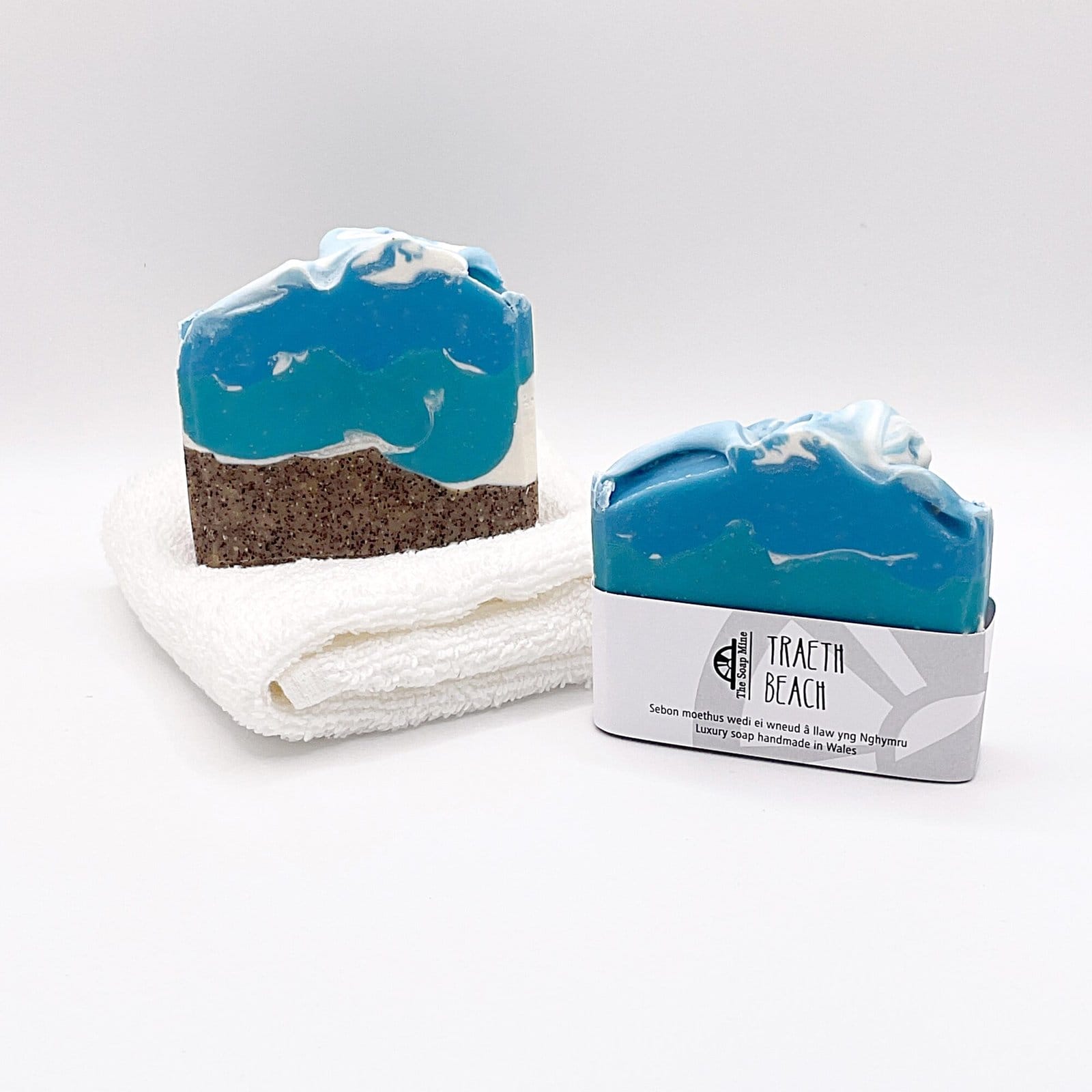
Two bars of Traeth (Beach) soap and a white face cloth
Traeth Handmade Soap

And there we have it. From a collection of oils, butters, water and sodium hydroxide to a finished bar of handmade soap.

I love that I can start with a carefully calculated recipe, choose the colours and fragrance, create something beautiful, and eventually end up with a product that someone will enjoy using every day.

There’s science involved, there’s creativity involved, and there’s an awful lot of patience involved. Still, even after all these years, cutting into a freshly made loaf and seeing the finished bars for the first time is something I look forward to. Every single time.

And knowing that those bars will eventually find their way into bathrooms all over the country makes it even better.

Not bad for a few oils, some water and a bit of chemistry, is it?

Vicki x

Posted on — Leave a comment

Will a bar of soap in your woollens drawer keep moths away?

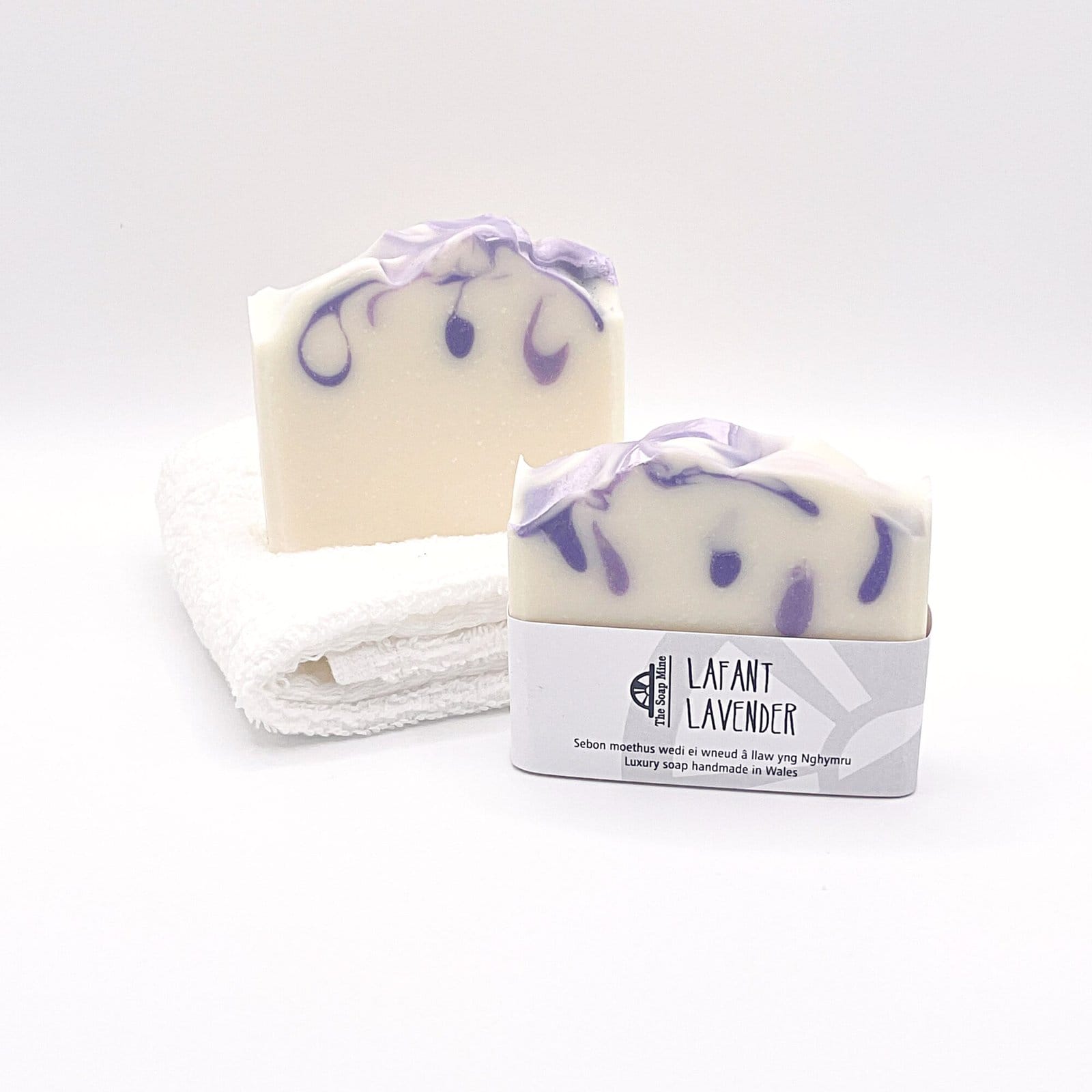
Two bars of Lavender Handmade Soap

A customer asked me this recently, and I thought it was a very good question. Can a bar of soap tucked in with your jumpers keep the moths away? Well, while I’d love to tell you that my soap can keep you clean AND act as security detail for your knitwear, I certainly wouldn’t trust it with your favourite cardigan.

Two bars of Lavender Handmade Soap

I AM an advocate for popping a bar of lovely smelling soap into your drawers – it keeps the bars dry and away from sunlight, and has the added bonus of making your clothes smell lovely. But no, I wouldn’t rely on soap for moth protection.

Surely lavender soap can help keep moths at bay?

Lavender has a long history of being tucked into drawers and wardrobes. English Heritage are experts in keeping old fabrics safe, and according to them, dried lavender sachets can help repel adult clothes moths (although the effect is temporary and they don’t affect larvae already in clothing).

But a lavender sachet and a bar of lavender soap aren’t the same thing, and I couldn’t find any reliable evidence that scented bar of soap probably could release enough of the right compounds to protect your woollens.

So, lovely scent? Certainly. A great reason to pop a bar in a drawer. Guaranteed cardigan bodyguard? Sadly, no.

Who’s actually eating your jumper?

Here’s the slightly unpleasant bit: it’s the clothes moth larvae that eat the fibres, rather than the adult moths. The adults lay eggs, and the resulting larvae help themselves to your woollens. Which means that even something that discourages adults won’t necessarily stop an existing problem. Tiny squatters with expensive tastes!

A few practical habits are more useful than giving your soap an extra job on the side:

What does helps protect woollens?

  • Put clothes away clean and completely dry. Food marks and perspiration make fabrics more appealing to clothes moth larvae. Follow the garment’s care instructions.
  • Vacuum drawers and wardrobes, including corners and crevices where fluff collects.
  • Use well-sealed bags or airtight boxes for longer-term storage, starting with clean, pest-free clothes.
  • Check occasionally, especially inside folds and seams, for holes, larvae or silky webbing.

If you find signs of moths, deal with the affected clothes and clean the storage area. Adding a nice smell won’t solve it. Clothes moth pheromone traps can help you spot activity, but they aren’t a complete treatment.

And the soap?

If you enjoy keeping a bar in your drawer for the scent, go ahead. Use a dry bar and keep it in a breathable paper wrapper or sachet, away from direct contact with your clothes.

Just don’t put it in charge of moth prevention, it hasn’t done the training 😉

Vicki x

Posted on — Leave a comment

Isn’t solid soap a bit old-fashioned?

A bar of soapy Blue Slate Soap in a wooden soap dish

Day 14 of Blogtober, and time to address a common misconception…

It’s a question I’ve heard more than once, and I can understand why people brought up on liquid soap and shower gels might think bars of soap are old-fashioned.  For some, bar soap conjures up memories of a slightly grubby bar sitting in a puddle beside Auntie Nora’s bathroom sink, while modern bathrooms are filled with sleek, beautifully designed plastic bottles of liquid handwash and gels.

However, I think solid soap is one of the most modern choices you can make for your bathroom. Yes, I realise that that is exactly what you might expect me to say, as someone who makes soap for a living. But consider this…

Are plastic bottles really progress?

Somewhere along the way, we seem to have decided that putting soap into a plastic bottle made it better.  More modern, more sophisticated, more convenient.  (and even I can grudgingly admit that soap in pump bottles might perhaps be quite convenient).

But think about what we’re actually doing. We’re buying a bottle, using the contents, and then, in most cases, disposing of the packaging and buying another one.

And another.

And another.

All for a product that does essentially the same job as a bar of soap.

Less packaging, less waste

One of the biggest advantages of solid soap is that it doesn’t need a plastic bottle.  A bar can be packaged in a simple paper wrapper or cardboard box, avoiding the need for another plastic container and pump mechanism.

And while recycling is important, avoiding unnecessary packaging in the first place is even better.

Then there’s the water.

Liquid handwash and shower gel generally contain a substantial amount of water as part of their formulation. Solid soap contains very little, which means you’re not buying and transporting quite so much water along with your cleaning product.

In fact, research comparing different handwashing methods has found that bar soap can have a lower environmental impact than liquid soap in several important categories, including greenhouse gas emissions.

Of course, no product is completely without environmental impact, and ingredients, manufacturing, packaging and how we use a product all matter.  But when it comes to reducing single-use plastic in the bathroom, solid soap is a clear winner.

Old-fashioned doesn’t mean outdated

Here’s another thought. Just because something has been around for hundreds of years, does that mean it needs replacing?  We still use plates, books, bicycles and wooden spoons.  Nobody’s suggesting we need to reinvent the spoon simply because it’s been doing a perfectly good job for centuries.

Some things have stuck around because they work.  And traditional soap is one of them.  The technology might be old, but the reasons for choosing it can be thoroughly modern.

Reducing packaging. Being more thoughtful about what we buy. Choosing products that do their job without creating unnecessary waste. Those aren’t outdated ideas. Quite the opposite.

But what about the soggy soap?

Ah yes. The dreaded soggy soap. This is probably one of the biggest complaints I hear about using a bar, and the solution is wonderfully straightforward.  I know, I’m like a broken record but:

Give your soap somewhere to drain and dry between uses!

A decent draining soap dish or soap ladder makes a huge difference. Keep the bar out of standing water and away from the direct shower spray, and it’ll last much better.  And if you use a washcloth or loofah in the shower, you can work up a lovely lather without keeping the bar under running water.

I’m not suggesting everyone should throw away their liquid soap tomorrow – that would rather defeat the object of trying to reduce waste, wouldn’t it?   But when your current bottle runs out, perhaps consider whether you actually need to replace it with another bottle.   A lovely bar of soap could do exactly the same job 😉

A bar of soapy Blue Slate Soap in a wooden soap dish

It can smell gorgeous, feel lovely to use, look beautiful beside your sink and help you avoid another piece of disposable packaging.

(Oh, and if you already have a refillable dispenser that you love, that is a perfectly reasonable way to cut down on single-use packaging. PROVIDED  you take it to an eco-friendly refill store to, well… refill).

So is solid soap old-fashioned?

Well, the method of making it certainly has a long history.  But choosing a practical, effective product that helps reduce unnecessary plastic waste?  I’d call that pretty modern, actually.

And finally, when all’s said and done, if being old-fashioned means enjoying a gorgeous bar of handmade soap instead of buying yet another plastic bottle? Well, actually, I’m very happy to be old-fashioned.

Vicki x

Posted on — Leave a comment

Confessions from a Soapmaker’s Soap Dish

Three bars of soap in a wooden soap dish

It’s Day 13 of Blogtober, and after a VERY busy day running soapmaking workshops all day yesterday, today’s post is a very quick one.

Ever wondered what soap a soapmaker actually uses at home? Well, wonder no more, because today I’m giving you an exclusive peek at our own bathroom soap dishes.

First up, the bathroom sink dish. Heavily autumn-themed, as you can see. 😁

Three bars of soap in a wooden soap dish

Most of the time, I use end pieces or wonky, slightly undersized bars, but when I’m launching seasonal specials, I usually pinch one full bar of each fragrance for photography, reels and other bits and pieces.

So at the moment, we’ve got Hocus Pocus, Campfire Marshmallow and Maple & Elm.

Nothing beautifully arranged or Instagram-worthy here. Just real soap, being used in a real bathroom, by someone who happens to make rather a lot of the stuff. And yes, I do often find myself assessing the lather or sniffing the fragrance rather than simply getting on with washing. Occupational hazard. 😉

And then there’s THIS soap dish, on the side of the bath. This is where the bars go to enjoy their retirement once they’ve been reduced to roughly half their original size.

Wooden soap dish with lots of small slivers of different soaps

They’re still absolutely fine for using in the shower, and they do get used every day, but before too long they’ll be entering their third and final era. Into the exfoliating sisal bag they’ll go, all lumped together, so that every last little scrap gets used up.

Three stages of a soap bar’s life. Who knew there was such a thing as a soap retirement plan? 😂

So there you have it. A little glimpse behind the scenes, and photographic evidence that even a soapmaker’s soap dish isn’t always ready for its close-up 🫣

Vicki x

Posted on — Leave a comment

The Best Scents for Relaxation (According to Science!)

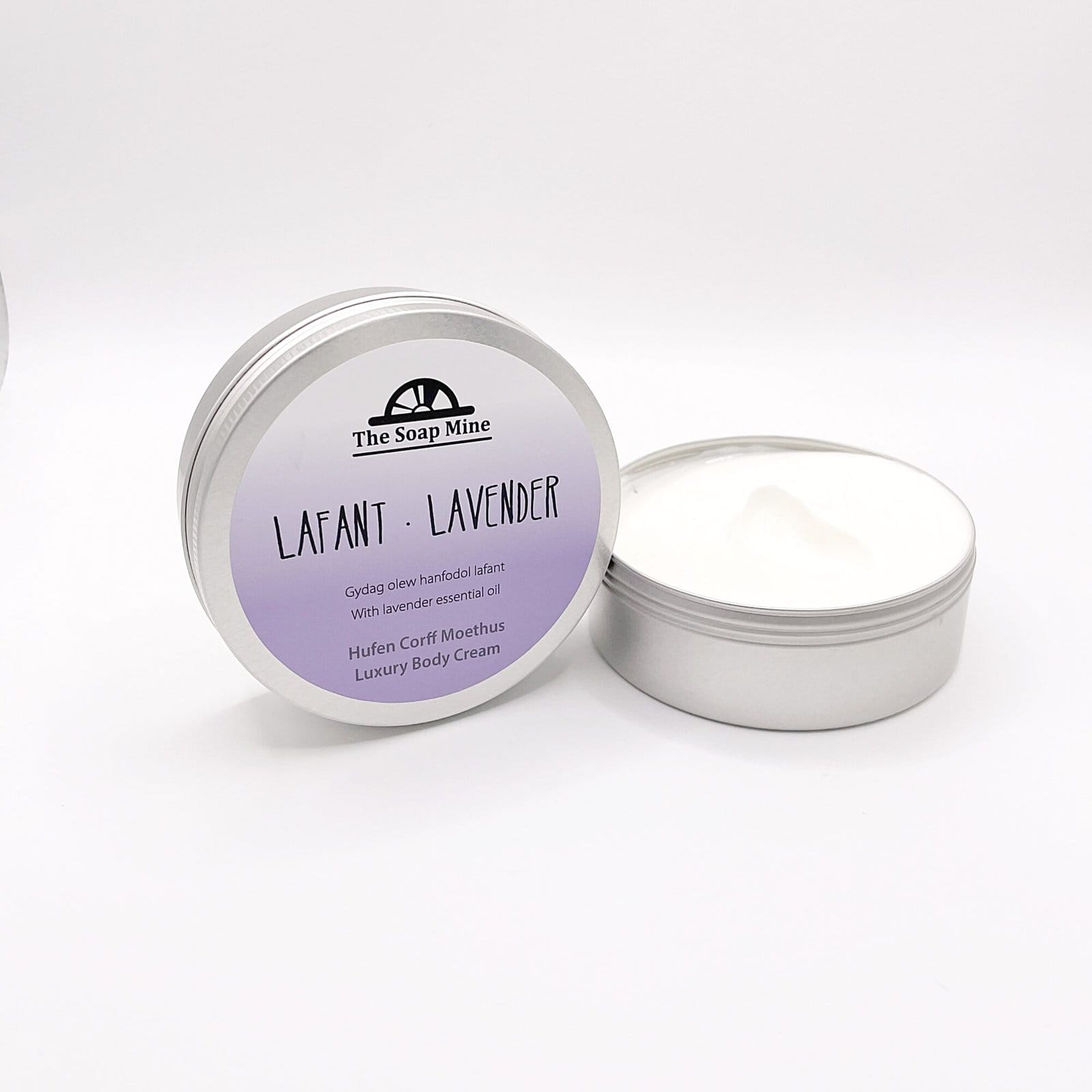
A tin of lavender body cream

Just imagine. You’ve finally finished the day’s to-do list (or at least shoved it under a cushion where it can’t glare at you), you’ve got a warm bath waiting, a proper bar of soap at the ready, and the scent drifting through the air makes your shoulders drop an inch.

Lovely, isn’t it?

But have you ever wondered why certain fragrances make you feel calmer, happier or more relaxed?

It’s not necessarily just your imagination. Our sense of smell is closely connected to parts of the brain involved in emotion and memory, which helps explain why a particular fragrance can instantly remind us of a person, a place or a happy moment.

And researchers have been investigating whether some scents might actually help us feel less stressed.

The results are interesting, although it’s worth remembering that aromatherapy isn’t a miracle cure, and what one person finds wonderfully relaxing might make somebody else wrinkle their nose in disgust.

So, here are five fragrances worth exploring when you fancy a little downtime.

1. Lavender: The classic calmer

If relaxation had a mascot, it would probably be lavender.

It’s one of the most widely studied fragrances in aromatherapy, and some research suggests that inhaling lavender essential oil may help reduce feelings of anxiety and promote relaxation.

There have even been studies involving patients awaiting medical procedures, where lavender aromatherapy has been associated with reduced anxiety.

Does that mean one sniff will instantly send you off to sleep? Sadly not. But if you enjoy lavender, incorporating the fragrance into your evening routine might help make bedtime feel a little more peaceful.

How to enjoy it

A tin of lavender body cream
Luxury Body Cream – Lavender

And if you’ve got time for all three, well, that sounds like a perfectly reasonable way to spend an evening.

2. Sweet orange: Sunshine for the soul

There’s something wonderfully cheerful about the smell of freshly peeled oranges.

Bright, juicy and uplifting, it’s the sort of fragrance that reminds me of sunshine, even when the weather outside is doing its usual North Wales thing.

Interestingly, researchers have investigated sweet orange essential oil in stressful situations, including dental appointments.

Some small studies have reported lower anxiety levels among people exposed to orange fragrance, although the results aren’t consistent enough to guarantee the same effect for everyone.

Still, if citrus fragrances make you feel cheerful, that’s reason enough to enjoy them.

How to enjoy it:

  • Start the morning with a citrus-scented soap in the shower.
  • Use a suitable citrus fragrance in a diffuser, following the manufacturer’s instructions.
  • Choose a bright, fruity fragrance when you need a little pick-me-up.

I can’t promise it’ll make a Monday morning feel like a holiday in the Mediterranean, but it’s worth a try.

3. Rose: A little floral comfort

Rose is one of those fragrances that people seem to have very strong feelings about. Some adore its rich, romantic floral scent. Others associate it with old-fashioned perfumes or their grandmother’s dressing table.

Personally, I think a good rose fragrance can be absolutely gorgeous.

Rose essential oil has also been studied for its possible effects on stress and anxiety. Some small studies have produced encouraging results, although more research is needed before we can draw firm conclusions.

For me, rose is a lovely example of how fragrance can be comforting simply because of the memories and associations we attach to it.

How to enjoy it:

  • Treat yourself to a rose-scented bath.
  • Use a rose-scented soap for a slow, leisurely wash.
  • Enjoy a rose-scented room spray designed for use around the home.

And if rose reminds you of somebody special, that little trip down memory lane might be the nicest part of all.

Two bars of rose scented handmade soap
Rose Handmade Soap

4. Sandalwood: The grounding one

Unlike bright citrus or sweet floral fragrances, sandalwood has a warm, woody scent that many people find comforting. It’s rich, smooth and earthy, making it a popular choice for perfumes, soaps and home fragrances.

There has been some research into sandalwood and its effects on mood and alertness, but the evidence for its ability to reduce stress is still quite limited.

That doesn’t mean it can’t be part of a relaxing routine, of course. Sometimes it’s simply about choosing a fragrance that makes you feel comfortable and settled.

How to enjoy it:

  • Choose a sandalwood-scented soap for your evening shower.
  • Enjoy a suitable woody home fragrance while reading.
  • Pair the scent with a little quiet time, away from your phone and the never-ending to-do list.

Especially useful if your brain is doing that thing where it has approximately 27 tabs open, and at least three of them are playing music.

5. Bergamot: Calm meets uplifting

If you’re an Earl Grey tea drinker, you’ll already be familiar with bergamot. It’s a citrus fruit with a distinctive fragrance that’s fresh, slightly floral and a little more sophisticated than straightforward orange or lemon.

Bergamot essential oil has been investigated in several small aromatherapy studies, some of which have reported improvements in mood or feelings of stress. Again, the evidence is promising rather than conclusive, but it’s an interesting fragrance to explore.

What I particularly like about bergamot is that it combines beautifully with other scents, including lavender, woody fragrances and other citrus notes.

How to enjoy it:

  • Choose a bergamot-scented soap for a refreshing shower.
  • Enjoy a cup of Earl Grey while taking five minutes to yourself.
  • Use a suitably formulated bergamot home fragrance while reading or relaxing.

And if you do opt for the Earl Grey, I’d strongly recommend a biscuit to go with it. Entirely for scientific purposes, obviously.

A little science, a lot of comfort

So, can fragrance genuinely help us relax? Possibly, yes.

Research into aromatherapy has produced some encouraging findings, particularly for lavender, and there is evidence that certain aromas may influence how people experience stress and anxiety.

But studies vary in quality, and the results don’t mean that every lavender soap, rose bath or bergamot candle will produce a measurable physiological effect.

There’s also the very personal side of fragrance to consider. A scent that reminds you of a lovely holiday, your childhood home or somebody you love might make you smile before you’ve even consciously worked out why. That’s one of the things I find so fascinating about our sense of smell.

Of course, you don’t need scientific research to give yourself permission to enjoy a relaxing bath or a lovely-smelling shower. Taking a little time for yourself is worthwhile in its own right.

Try this tonight

Here’s a suggestion for a little evening relaxation that doesn’t involve booking a spa day, spending a fortune or leaving the house.

Run yourself a comfortably warm bath.

Add a little of your favourite Foaming Bath Sprinkles, following the instructions on the packaging. Put your phone somewhere you can’t absent-mindedly reach for it. Lower yourself into the water, get comfortable and spend some time simply enjoying the warmth and fragrance.

No emails. No laundry. No mentally writing tomorrow’s shopping list. Just ten or fifteen minutes when nobody needs anything from you.

And if you’re not a bath person, a lovely-smelling shower followed by a fabulous smelling body cream and a few minutes with a book or a panad can be just as enjoyable.

The important thing isn’t creating the perfect relaxation routine. It’s finding small moments of pleasure that fit into your actual life. Because while fragrance can’t make your problems disappear, it can certainly make an ordinary moment feel a little more special.

And sometimes that’s exactly what you need.

Vicki x

Posted on — Leave a comment

Why I Don’t Describe my Soap as ‘Natural’

Two Bars of Spiced Golden Pear Handmade Soap
Two bars of Spiced Golden Pear Soap Handmade Soap and a facecloth

Last year, a woman came up to my stall at one of the Christmas markets and asked:

“Are all these soaps natural, yeah?” 

My response was “Well, it depends what you mean by natural”, hoping that would open up a conversation about ingredients etc. But no, she gave me a disdainful look and walked away, mumbling something about only using natural stuff…

Here at The Soap Mine you won’t ever find me describing my bars as ‘natural’, which might seem a little odd for a business making soap from lovely oils and butters.  So why’s that then?

What does ‘natural’ actually mean?

Well, that’s the problem, really.  Ask ten people what they mean by natural skincare and you might get ten different answers.

  • Does it mean every ingredient comes directly from a plant?
  • Does it mean nothing has been manufactured or processed?
  • Does it mean a product contains no synthetic ingredients?
  • Or does it simply mean something that feels wholesome and environmentally friendly?

It’s a word that sounds reassuring, but without a clear explanation it doesn’t tell you very much about what’s actually inside a product, and there IS no industry-standard definition of the word.

Natural doesn’t automatically mean better

I know I bang on about this quite a lot, but it’s worth repeating.  Just because something comes from nature doesn’t automatically make it harmless, gentle or suitable for everyone’s skin.

Poison ivy is natural. So are stinging nettles.  Essential oils, lovely as they can be, contain naturally occurring fragrance compounds that some people are sensitive or even allergic to.  Equally, an ingredient made in a laboratory shouldn’t be something to be frightened of.  What actually matters is what the ingredient is, how it’s used and whether it’s suitable for the finished product.

Soap itself is the result of chemistry

Traditional soap is made through a chemical reaction between oils or fats and an alkali. I start with oils and butters such as olive oil, coconut oil, shea butter and cocoa butter, then combine them with a carefully calculated sodium hydroxide solution. That sodium hydroxide has been created in a lab, and 99.9% of makers* of solid soap** in the land use it.

The resulting reaction, called saponification, transforms those ingredients into soap and glycerine.  Which means the finished soap is not simply a mixture of untouched plant oils in their ‘natural’ state

It’s a brand new product, created through chemistry.  And that’s an important distinction because rubbing olive oil and cocoa butter onto your hands wouldn’t have quite the same cleansing effect!

I’d rather tell you what’s actually in it

Some of my soaps are scented with essential oils, others with fragrance oils.  I use cosmetic-grade colourants, usually mica, to create the designs. My soaps are vegan-friendly and palm-free, and I formulate them using carefully chosen oils and butters.

These are specific things I can explain.  I’d much rather tell you exactly what I use and why, than rely on a broad description that could mean something different to every customer.

Oh and while we’re here, there’s no such thing as ‘chemical-free’ soap either.  Water is a chemical. Oxygen is a chemical. Everything around us is made of chemicals.

So when I describe my soap, I prefer to talk about the ingredients, how it’s made and what you can expect from it.  It might not sound quite as romantic as promising something completely natural and chemical-free. But it’s waaay more accurate.

And I’d rather give you accurate information than a lovely-sounding claim that doesn’t really mean anything.

Vicki x

*There is a tiny group of niche soapmaker who make their own lye from ashes, but it’s extremely difficult to get certification to sell the soaps made from it as it’s difficult to ensure uniformity of product. If a soapmaker is making their own lye, believe me, it will be their USP and you’ll know about it – they’ll be shouting it from the rooftops. In all my years making soap I’ve never found anyone certified to sell soap made with lye they’ve created themselves.

**Liquid soapmakers use potassium hydroxide rather than sodium hydroxide, but the point still stands – the potassium hydroxide is created in a lab.

Posted on — Leave a comment

Does handmade soap contain lye?

Here’s a question that comes up quite often when people discover how traditional soap is made.

“Does your soap contain lye?”

The short answer is that I use lye to make my soap, but a properly formulated and fully saponified bar doesn’t contain any free, caustic lye.

And before anyone starts worrying about what they’ve been washing themselves with, let me explain. Because this is one of those occasions when a little understanding of the chemistry makes everything much less alarming.

First of all, what exactly is lye?

Lye is the name commonly given to a strongly alkaline substance or solution used in soapmaking.

For traditional solid soap, the alkali is sodium hydroxide (NaOH), also known as caustic soda. It’s usually supplied as white pellets or flakes, which are dissolved in water before being combined with oils and butters. Sodium hydroxide isn’t some mysterious soapmaking ingredient. It’s widely used in industry, including paper manufacturing, water treatment, food processing and the production of cleaning products.

It also happens to be essential to making traditional solid soap.

For liquid soap, soapmakers generally use a different alkali called potassium hydroxide, which produces softer, more soluble soaps. But here at The Soap Mine, it’s sodium hydroxide that I use to transform my lovely oils and butters into the solid bars you see on the shelves.

Isn’t lye dangerous?

Yes, absolutely. And I’m not going to pretend otherwise. Sodium hydroxide is a highly caustic substance, which means it can cause serious chemical burns if it comes into contact with skin or eyes.

When it’s dissolved in water, the process generates a significant amount of heat, and the resulting solution needs to be handled carefully.

This is why soapmaking isn’t simply a case of throwing a few ingredients into a mixing bowl and hoping for the best.

I work with appropriate protective equipment, including gloves and eye protection, and follow careful procedures for measuring, mixing and handling my ingredients. The sodium hydroxide is always added to the water, never the other way around (that’s super dangerous) and suitable containers (never glass!) ventilation and safe working practices are essential.

It’s a substance that deserves respect. Not fear, but certainly not complacency either. I’ve been making soap for years, and I still take these precautions every single time.

So why use something so caustic to make soap?

Because without a strong alkali, you simply can’t make traditional soap. I could mix olive oil, coconut oil, shea butter and cocoa butter together until the cows came home, but I’d still just have a greasy mixture of oils and butters. To turn those ingredients into soap, they need to undergo a chemical reaction with sodium hydroxide.

And that reaction has a rather wonderful name: Saponification.

What happens during saponification?

This is where the chemistry gets interesting.

Oils and butters are made up largely of substances called triglycerides. These are molecules made from fatty acids joined together by a substance called glycerol (also known as glycerine).

When I combine my oils and butters with a carefully calculated solution of sodium hydroxide, a chemical reaction begins. The triglycerides are broken down, and the fatty acids react to form something completely new: the sodium salts of fatty acids. Which is a very scientific way of saying soap. Glycerine is also produced naturally during the reaction.

In simple terms:

Oils and butters + sodium hydroxide = soap + glycerine

The starting ingredients are chemically transformed into new substances with different properties.

It’s rather like the difference between flour, eggs and a finished cake. The ingredients you start with aren’t necessarily present in the same form once the process is complete. (Although I wouldn’t recommend tasting the soap to test the analogy).

Does that mean there’s no lye left in the finished bar?

Yes, that’s exactly what should happen in a correctly formulated and properly made bar of cold process soap. The sodium hydroxide reacts with the fatty components of the oils and butters during saponification. By the time that reaction is complete, there should be no free, caustic sodium hydroxide remaining.

And here’s an important point: the lye doesn’t evaporate or disappear during curing.

That’s a misconception I see surprisingly often. Sodium hydroxide doesn’t simply evaporate away while the soap sits on a shelf. It is consumed during the chemical reaction that produces soap. In fact, saponification is largely complete within the first day or two of making a normal cold process batch.

The four-to-six-week curing period that follows is mainly about allowing excess water to evaporate and the internal structure of the soap to develop, producing a harder, longer-lasting bar.

I’ve written a separate blog post about why handmade soap needs to cure if you’d like to know more about that part of the process.

Of course, if soap has been incorrectly formulated or badly mixed, it can contain excess lye. That’s why accurate calculations, good manufacturing procedures and proper quality control matter so much. It’s also why I don’t recommend treating soapmaking as an exercise in guesswork.

What about all those strange ingredient names on soap labels?

If you’ve looked at the ingredients on one of my bars of soap, you might have spotted names such as:

  • Sodium Olivate
  • Sodium Cocoate
  • Sodium Shea Butterate
  • Sodium Cocoa Butterate
  • Sodium Castorate

They could sound a bit intimidating, but they’re simply the names of the soaps produced when different oils and butters react with sodium hydroxide. For example, Sodium Olivate is the soap produced from olive oil, while Sodium Cocoate is produced from coconut oil.

Remember that chemical reaction we talked about earlier – saponification? This is the result.

The oils and butters have reacted with sodium hydroxide to form new substances, and those new substances have their own names.

Why don’t I just use the familiar ingredient names?

Because cosmetic labelling in the UK is regulated, and I’m required to provide an ingredient list using recognised cosmetic ingredient names.

These standardised names are commonly called INCI names, which stands for International Nomenclature of Cosmetic Ingredients.

So when you see Sodium Olivate or Sodium Cocoate on my soap labels, I’m not choosing complicated names to make my products sound more scientific, and I’m certainly not trying to bamboozle anybody! I’m just using the recognised names for the saponified ingredients, as required by the labelling specifications for my products.

In fact, standardised ingredient names are intended to make things less confusing, not more. They allow ingredients to be identified consistently across different cosmetic products, regardless of the manufacturer’s preferred descriptions.

They’re particularly important for people who need to check ingredients because of allergies or sensitivities.

So although the ingredient list might look like a collection of rather complicated chemical names, there’s nothing mysterious going on. It’s just the chemistry of soapmaking, written in a language that probably makes much more sense to a cosmetic chemist than to the average person standing in their bathroom. 😂

Why do I think it’s important to explain all this?

Because I think customers deserve to know what’s in the products they’re using, and how those products are made.

I’ve occasionally seen soap advertised as “lye-free”, usually with the implication that this somehow makes it safer, purer or more natural than soap made using sodium hydroxide. But if it’s genuine traditional soap, an alkali was involved somewhere in its manufacture, even if the person selling the finished product didn’t handle it themselves.

Melt-and-pour soap bases, for example, have generally already undergone saponification before the soapmaker buys them. There’s nothing wrong with using a premade base, but it’s misleading to suggest that traditional soap can be made simply by leaving the lye out.

And as I’ve said many times before, I’m not a fan of frightening people with scientific ingredient names or pretending that something becomes inherently safer just because it’s described as natural. EVERYTHING is made of chemicals. What matters is which chemicals we’re talking about, how they’re used and what happens to them during manufacture.

So yes, I use sodium hydroxide to make every bar of traditional cold process soap at The Soap Mine.

I handle it carefully, calculate my recipes accurately and allow every batch to undergo the processes needed to become the finished product. The result isn’t a dangerous mixture of caustic soda and oils. It’s soap. And I still think it’s rather amazing that such ordinary ingredients can undergo a chemical reaction and become something so completely different.

Even after all these years, the chemistry hasn’t lost its magic.

Vicki x

Posted on — Leave a comment

Is bar soap hygienic?

A foamy bar of Cysur Soap being used.

Yes. For everyday washing at home, a bar of soap is a good, effective choice. You don’t need a pump bottle to get your hands clean. And yet “Is bar soap hygienic?” is one of those questions that keeps coming up.

I understand the thinking. Someone washes their dirty hands with a bar, puts it down, and the next person picks it up. Surely that means they’re passing their germs along? It sounds plausible. But it misses a rather important part of the process: the washing.

True soap is naturally alkaline

Traditional soap, made by combining oils and fats with an alkali, is naturally alkaline. That makes it a less welcoming environment for bacteria to grow in. And bar that can dry between uses also offers less moisture for microbial growth.

So the idea that a properly kept bar is simply a cosy home for germs misses some useful chemistry. Its alkalinity is part of the picture, alongside drying between uses and the washing and rinsing that happen when you use it. Alkaline doesn’t mean sterile, but there’s no need for soap to be sterile to help you get clean.

The soap helps wash germs away

Soap helps loosen dirt and oils, allowing them and microbes to be rinsed away, so finding bacteria on a used bar doesn’t mean those bacteria will remain on the next person’s hands after washing.

In a study published in Epidemiology & Infection, researchers deliberately added two types of bacteria to soap bars at levels far higher than those previously reported on used bars. After people washed with those bars, neither test bacterium was detected on their hands. That’s reassuring evidence for routine handwashing.

And what about the pump bottle?

We often assume liquid soap must be more hygienic because nobody touches the soap itself. But we do touch the pump. Usually with the very hands we’re about to wash. When did you last clean yours, the pump I mean, obvs! No judgement. There are quite enough things on the household jobs list already. 😂

A liquid soap dispenser isn’t automatically germ-free. Research into refillable liquid-soap dispensers has found bacterial contamination, including biofilms on and inside pump heads. That doesn’t mean you should worry about every bottle beside the sink. It does mean that “it comes out of a pump” is by no means a guarantee of better hygiene.

Soap dishes and dispensers both benefit from being kept clean.

A bar is easy to look after

You don’t need an elaborate routine.

Rinse off any visible dirt, keep your bar on a draining dish, and give it a chance to dry between uses. Clean the dish regularly too. Sensible care for something you use every day, and it helps the bar last longer as well.

The important bit is how you wash

Whether you prefer a bar or a bottle, a hurried dab of soap and a quick splash won’t make the most of either. The NHS recommends washing for around 20 seconds, covering all parts of your hands, then rinsing and drying thoroughly.

You could spend those seconds enjoying the scent and luscious lather of a lovely handmade bar.

So, can you use solid soap with confidence?

For ordinary washing at home, yes, absolutely! A well-kept bar, water and a thorough wash make a perfectly practical combination. If you’ve been avoiding solid soap purely because you thought it was unhygienic, please don’t let that be the thing that puts you off.

Choose a bar you enjoy using, give it somewhere to drain, and let it get on with the job.

Lovely soap. Clean hands. Fewer plastic bottles. Sounds like a good arrangement to me. 😉

Vicki x

A foamy bar of Cysur Soap being used.

Posted on — Leave a comment

How long does a bar of soap last?

One bar of Enfys (rainbow) soap on a soap dish

Someone on Threads asked me a very reasonable question:

“If I only used a bar of soap for handwashing, say six times a day, how long would it last?”

My first thought was: how long is a piece of string? Which is spectacularly unhelpful, I know. But even with the number of washes supplied, there are a few more things I’d need to know before offering anything resembling an accurate answer.

How big is the bar?

A little guest soap and a full-sized bar aren’t starting with the same amount of soap. “One bar” is a bit like “one slice of cake”. There are slices, and then there are slices.

What’s the soap like?

Different recipes produce bars that behave very differently in water. The oils used, the formulation and how long the soap has cured can all affect how quickly it wears down. So even two bars of the exact same weight, but from different makers, won’t necessarily last the same length of time.

How much soap do you use each time?

Do you rub the bar just long enough to get soap onto your hands, put it down and carry on washing? Or does the bar stay in your hands for the whole performance? Both count as “one wash”, but they can use quite different amounts of soap. I’m not suggesting you shorten your handwashing. Just that once you’ve got enough soap, the bar can sit that bit out.

What’s your water like?

Hard water makes it harder to build a lather, which may mean you use more soap each time. Same bar, same number of washes, different water: potentially a different lifespan.

What happens between washes?

This is a big one. A bar on a draining dish, away from splashes, gets a chance to dry. A bar sitting in a puddle keeps softening even while nobody’s using it. You might only wash your hands six times a day, but your soap could be spending the other twenty-three-and-a-bit hours quietly turning to mush. Not the way it should be spending its free time.

How many people use the bar?

Six washes a day for you is one thing. Six washes for you, plus everyone else who wanders past the sink, is another. Soap does not keep a visitors’ book. The children may have been involved.

So what’s the answer?

I can’t reliably turn “six washes a day” into a particular number of days or weeks. And even if I had answers to all the questions above, It would be difficult to even hazard a guess, there are so many factors involved. So the simplest way to find out is to note when you start a bar and see how long it lasts in your household. That gives you a useful guide for the next similar bar, used in the same way.

In the meantime, give it a draining dish, keep it out of standing water, and put it down once you’ve got enough soap on your hands.

I can make the soap. I can’t supervise its living arrangements. 😉

Vicki x

One bar of Enfys (rainbow) soap on a soap dish
Enfys / Rainbow

Posted on — Leave a comment

Can you use a Bar of Soap in the Shower?

Some of you are going to look at that heading and think I’ve lost my mind, because lots of us have been using solid soap in the shower forever, but you’d be surprised how often I’m asked this question. The answer, of course, is always YES! A bar of soap isn’t just for washing hands at the basin. You can absolutely use it to wash your body in the shower too.

Maple & Elm handmade soap and a loofah

If you’ve always used shower gel, it might feel like a slightly unfamiliar way to wash, but there’s nothing complicated or weird about it (despite what some people seem to think 😝 After all, shower gels in plastic bottles are actually a fairly modern concept, in the great scheme of things.

How do you use it?

You have a few options, depending on what you prefer.

Use your hands. Wet your hands and the bar, work up some lather, then put the soap down and wash your skin with your soapy hands.

Use the bar directly. Gently glide it over wet skin, put it down once you have enough soap, then use your hands to spread the lather and wash.

Use a washcloth or loofah. Wet it first, rub the soap over it and work up a lather before washing. Rinse it thoroughly afterwards and leave it somewhere it can dry.

None of these methods is compulsory. Choose whichever feels easiest and most enjoyable for you.

Do you need lots of bubbles?

You don’t need to produce a mountain of foam before you can wash. You can use just nough soap to spread over the areas you’re washing, then rinse thoroughly. However there is something lovely about lots of luscious lather and foam. It’s all down to your personal preference.

If you live in a hard-water area, building a lather can take a little more effort, and a washcloth or loofah may help you work up the bubbles. Don’t worry though, fewer bubbles or less lather doesn’t mean your soap is any less effective.

Where should you keep the bar?

I can’t stress this enough: keep your soap somewhere it can drain and dry between showers.

A draining soap dish, ladder or suitable shower rack can work well. The important thing is that the bar isn’t sitting in collected water.

Keep it out of the direct spray too. Water running over the bar will wash soap away even when you’re not using it.

And once you have enough soap on your hands or cloth, you can put the bar down. It doesn’t need to stay under the water for the whole shower.

What about a soap saver bag?

I recommend those for the last little slivers, so you can use up every bit. For a full-sized bar, a draining soap dish is my preference. Leaving it inside a damp bag can keep it wet and encourage it to soften.

A small change to your routine

If you enjoy shower gel, using a bar may simply be something you haven’t considered. It’s worth trying if you’d like to reduce your single use plastic consumption, or might enjoy the choice of fragrances and designs a handmade bar offers.

Choose a soap that suits your skin and your preferences, use it in whichever way works for you, and give it somewhere sensible to dry.

That’s really all there is to it. Your lovely bar is for all washing opportunities, not just the bathroom sink 😉

Vicki x

Posted on — Leave a comment

Why does handmade soap need to cure?

Buckle up for Day 6 of Blogtober!

It looks like soap. It smells like soap. So why won’t I let you have it yet?

Because looking finished and being ready to leave the workshop are two different things. Rather like me putting my coat on, then remembering fourteen things I need to do before I can actually leave the house.

What does “curing” mean?

First of all, let’s clear up what curing isn’t.

Soap is not slowly “turning into soap” for four to six weeks. The chemical reaction between the oils, butters and sodium hydroxide, known as saponification, is largely complete within the first 24 to 36 hours after I pour the soap into the mould.

Curing is what happens afterwards.

During the curing period, excess water gradually evaporates from the bars. At the same time, the internal structure of the soap continues to develop and become more crystalline. The result is a harder, longer-lasting bar with better lather and a more refined feel when you use it.

When soap is first cut, it is still quite soft, largely because of its water content. Water is an essential part of the soapmaking process because I combine my oils and butters with a solution of sodium hydroxide and water to make the soap. But we don’t want all of that water to remain in the finished bar.

A soft bar of soap simply won’t last very long in your bathroom. It will wear away much more quickly, which is no good for you and no good for your hard-earned money either. So, while the bars are curing, water is slowly evaporating and they become firmer and harder. The structure of the soap continues to develop too, helping to improve the lather and the overall performance of the finished bar.

That cure time is what allows the soap to become the product I actually want you to use.

And just to clear up another common misconception: curing isn’t about waiting for sodium hydroxide to “evaporate”. That isn’t how the chemistry works.

How do I cure my bars?

Once I’ve unmoulded and cut a batch of soap, the individual bars spend around four to six weeks curing before they are ready for sale.

Over the years I’ve collected hundreds of plastic stacking baskets for the job. Before I start cutting, I line enough baskets with tissue paper, then place each freshly cut bar inside with space around it so that air can circulate freely.

I usually fit two loaves’ worth of soap into each basket, and every basket is labelled with the soap variety, its batch code and the date it will be ready to use.

A basket of curing soap

The baskets are then stacked away and left to do what soap does best at this stage: very little, very slowly.

How curing affects the weight of a bar

As the bars cure and lose water, they naturally lose some weight too. A commonly quoted rule of thumb is that a bar may lose around 10% of its original weight during curing, but in practice that can vary quite a bit from batch to batch.

That means I need to allow for that weight loss when I cut and cure the bars, so that once they are ready for sale they still meet the minimum weight stated on the packaging.

For many years I labelled my bars as 100g, but because curing isn’t completely predictable, I would occasionally end up with perfectly good finished bars weighing 98g or 99g. Technically, that meant I couldn’t sell them as 100g bars.

These days I label them as a minimum of 95g instead. I haven’t made the bars any smaller or changed the recipe, and most still weigh more than 100g when they are ready for sale. The 95g minimum simply gives me a sensible margin for the natural variation that happens during curing.

Why not sell it sooner?

Because I want you to receive a bar that performs properly, rather than one that has been rushed out of the workshop before it is ready. Admittedly, this can make stock planning rather interesting. If a particular variety suddenly becomes very popular, I can’t simply make another batch today and have it back on the shelf tomorrow. Every new batch still needs its full cure time.

That can occasionally mean a favourite soap is out of stock for a while, but shortening the curing period isn’t a compromise I’m willing to make. Waiting those extra weeks gives you a harder, longer-lasting bar that is properly ready to be used.

Why doesn’t commercially made soap need a long cure?

Commercial soap is usually produced very differently from traditional cold-process soap, which is why it can often be made, packaged and sent out much more quickly.

Mechanical processing: Many factory-made soaps are processed using heavy machinery that removes moisture and compresses the soap into a dense, hard bar. Milled soaps may be passed through rollers several times before being pressed into their final shape, so they don’t rely on weeks of air-drying to become firm.

Different formulations: Commercial bars contain ingredients designed to give them hardness, stability and a long shelf life. Some are technically detergent-based cleansing bars rather than traditional soap, so the manufacturing process is completely different from cold-process soapmaking.

Glycerin may be removed: During some large-scale soapmaking processes, the naturally produced glycerin is separated from the soap and used elsewhere. Because glycerin attracts and holds water, removing some or all of it also changes the moisture content and behaviour of the finished bar.

Handmade cold-process soap, on the other hand, is usually left much closer to the state it naturally reaches after saponification, so time does part of the work that industrial processing can achieve much more quickly.

So, although four to six weeks might seem like a long time to wait for something that already looks perfectly finished, that curing period is an important part of making good cold-process soap. It gives each bar the time it needs to become harder, longer lasting and ready to perform as it should.

It may not be the most exciting stage of soapmaking, but it is 100% worth the wait 😉

Vicki x

Posted on — Leave a comment

How long does soap stay in the mould before I cut it?

Day 5 of Blogtober 2026, and I’m back to answer another cutomer question. “How long does soap stay in the mould for before I unmould and cut it?”

If you follow The Soap Mine on Facebook or Instagram, you’ll have seen videos of soap being poured, and soap being cut.  But what happens in between those two events?  How long does the soap stay in the mould before it’s ready to be taken out and cut?

Multiple soap moulds full of soap
Freshly Poured Eryri Soap

Well, my usual routine these days is to pour the soap on one day, and unmould and cut it the following day.   But it wasn’t always that way.  When I first learned how to make soap I read somewhere that I should give soap a good 48hrs in the mould. So that’s what I did.  For quite a while actually.

It was only when I NEEDED to unmould sooner, for some long-forgotten reason, that I discovered that I didn’t need to wait the full 48 hours. 24 was plenty…  I guess the need had never arisen before, so I’d never tried it. Habits are strong

Nowadays I tend to make soap later on in the afternoons, between 3-6pm.  Before then I’m packing website orders, wrapping soap, completing paperwork, planning social media and so on and so forth, but the end of the afternoon is often reserved for soapmaking.  I then unmould and cut the soap the following day, before lunch, generally between 10.30 and 12.30.  (Yes, I’m quite wedded to my routines!).  

So while I’ve never investigated the absolute SOONEST I can unmould and cut my soap, I can say that my* loaves are generally ready the following morning, less than 24 hours after being poured. And quite possibly sooner.

*It’s worth noting that different formulations will have different setting-up times. Some soapmakers will unmould 48 or even 72 hours after pouring, while some will do it all within the same working day.  All part of the fun!

Of course, being ready to cut doesn’t mean it’s ready to use. There are still several weeks of curing to go, but that’s a whole other blog post. 😁

Vicki x

Posted on — Leave a comment

Do I need an antibacterial soap?

It’s Day 4 of Blogtober, and today I thought I would answer a question I get asked quite often about antibacterial soap.

Some people seem to think that an antibacterial soap will be “stronger” or “cleaner” somehow, but for everyday washing at home? The answer is a resounding ‘No’, ordinary soap and water are enough. “Antibacterial” sounds reassuring, doesn’t it? Like your soap has had extra training and turned up wearing a tiny security badge. But labelling a soap as ‘antibacterial’ doesn’t mean that your hands, or anywhere else for that matter, will be any cleaner.

Isn’t killing bacteria the whole point?

Washing with soap and water helps remove dirt and germs from your skin so you can rinse them away. Your soap doesn’t need added antibacterial ingredients to do that job.

The NHS advises that washing your hands properly with soap and water removes dirt, viruses and bacteria, helping to stop infections spreading. Its everyday handwashing guidance calls for soap, a thorough wash, rinsing and drying, without specifying an antibacterial soap. So no, you don’t need to go hunting for the most intimidating bottle on the shelf.

Could antibacterial ingredients contribute to resistance?

There’s another reason to question whether we need them in everyday soap. Research has shown that some antibacterial ingredients, including triclosan, can favour bacteria that are less susceptible to them. Laboratory studies have also found links with resistance to certain antibiotics.

That doesn’t mean every antibacterial handwash is a tiny superbug factory. But it does raise a sensible question: why add an ingredient we don’t need, when ordinary soap and water already do the everyday job?

“Antibacterial” might sound like an upgrade, but for your bathroom sink, it’s an unnecessary one.

What really matters is how you wash

A quick splash, a vague rub of of soap and wiping your hands on your jeans isn’t quite the routine we’re aiming for. 😂 For handwashing, the NHS recommends around 20 seconds of washing, (roughly the time it takes to sing ‘Happy Birthday twice), making sure you clean your palms, the backs of your hands, between your fingers, your thumbs and your fingertips. Then rinse and dry thoroughly.

Why I don’t make antibacterial soap

My soap is made for everyday washing. I don’t add antibacterial ingredients or make antibacterial claims, because a well-used bar of ordinary soap does the job you need it to do. I’d much rather make you a lovely bar you actually enjoy using, and encourage you to wash properly.

Note – If a healthcare professional has asked you to use a particular antiseptic/antibacterial wash, follow their advice. That’s a different situation from choosing soap for your bathroom sink. But for the everyday stuff, keep it simple: soap, water and a thorough wash.

No tiny security badge required.

Vicki x

Two bars of Fresh Linen Handmade Soap
Fresh Linen Handmade Soap