Posted on — Leave a comment

Is bar soap hygienic?

A foamy bar of Cysur Soap being used.

Yes. For everyday washing at home, a bar of soap is a good, effective choice. You don’t need a pump bottle to get your hands clean. And yet “Is bar soap hygienic?” is one of those questions that keeps coming up.

I understand the thinking. Someone washes their dirty hands with a bar, puts it down, and the next person picks it up. Surely that means they’re passing their germs along? It sounds plausible. But it misses a rather important part of the process: the washing.

True soap is naturally alkaline

Traditional soap, made by combining oils and fats with an alkali, is naturally alkaline. That makes it a less welcoming environment for bacteria to grow in. And bar that can dry between uses also offers less moisture for microbial growth.

So the idea that a properly kept bar is simply a cosy home for germs misses some useful chemistry. Its alkalinity is part of the picture, alongside drying between uses and the washing and rinsing that happen when you use it. Alkaline doesn’t mean sterile, but there’s no need for soap to be sterile to help you get clean.

The soap helps wash germs away

Soap helps loosen dirt and oils, allowing them and microbes to be rinsed away, so finding bacteria on a used bar doesn’t mean those bacteria will remain on the next person’s hands after washing.

In a study published in Epidemiology & Infection, researchers deliberately added two types of bacteria to soap bars at levels far higher than those previously reported on used bars. After people washed with those bars, neither test bacterium was detected on their hands. That’s reassuring evidence for routine handwashing.

And what about the pump bottle?

We often assume liquid soap must be more hygienic because nobody touches the soap itself. But we do touch the pump. Usually with the very hands we’re about to wash. When did you last clean yours, the pump I mean, obvs! No judgement. There are quite enough things on the household jobs list already. 😂

A liquid soap dispenser isn’t automatically germ-free. Research into refillable liquid-soap dispensers has found bacterial contamination, including biofilms on and inside pump heads. That doesn’t mean you should worry about every bottle beside the sink. It does mean that “it comes out of a pump” is by no means a guarantee of better hygiene.

Soap dishes and dispensers both benefit from being kept clean.

A bar is easy to look after

You don’t need an elaborate routine.

Rinse off any visible dirt, keep your bar on a draining dish, and give it a chance to dry between uses. Clean the dish regularly too. Sensible care for something you use every day, and it helps the bar last longer as well.

The important bit is how you wash

Whether you prefer a bar or a bottle, a hurried dab of soap and a quick splash won’t make the most of either. The NHS recommends washing for around 20 seconds, covering all parts of your hands, then rinsing and drying thoroughly.

You could spend those seconds enjoying the scent and luscious lather of a lovely handmade bar.

So, can you use solid soap with confidence?

For ordinary washing at home, yes, absolutely! A well-kept bar, water and a thorough wash make a perfectly practical combination. If you’ve been avoiding solid soap purely because you thought it was unhygienic, please don’t let that be the thing that puts you off.

Choose a bar you enjoy using, give it somewhere to drain, and let it get on with the job.

Lovely soap. Clean hands. Fewer plastic bottles. Sounds like a good arrangement to me. 😉

Vicki x

A foamy bar of Cysur Soap being used.

Posted on — Leave a comment

How long does a bar of soap last?

One bar of Enfys (rainbow) soap on a soap dish

Someone on Threads asked me a very reasonable question:

“If I only used a bar of soap for handwashing, say six times a day, how long would it last?”

My first thought was: how long is a piece of string? Which is spectacularly unhelpful, I know. But even with the number of washes supplied, there are a few more things I’d need to know before offering anything resembling an accurate answer.

How big is the bar?

A little guest soap and a full-sized bar aren’t starting with the same amount of soap. “One bar” is a bit like “one slice of cake”. There are slices, and then there are slices.

What’s the soap like?

Different recipes produce bars that behave very differently in water. The oils used, the formulation and how long the soap has cured can all affect how quickly it wears down. So even two bars of the exact same weight, but from different makers, won’t necessarily last the same length of time.

How much soap do you use each time?

Do you rub the bar just long enough to get soap onto your hands, put it down and carry on washing? Or does the bar stay in your hands for the whole performance? Both count as “one wash”, but they can use quite different amounts of soap. I’m not suggesting you shorten your handwashing. Just that once you’ve got enough soap, the bar can sit that bit out.

What’s your water like?

Hard water makes it harder to build a lather, which may mean you use more soap each time. Same bar, same number of washes, different water: potentially a different lifespan.

What happens between washes?

This is a big one. A bar on a draining dish, away from splashes, gets a chance to dry. A bar sitting in a puddle keeps softening even while nobody’s using it. You might only wash your hands six times a day, but your soap could be spending the other twenty-three-and-a-bit hours quietly turning to mush. Not the way it should be spending its free time.

How many people use the bar?

Six washes a day for you is one thing. Six washes for you, plus everyone else who wanders past the sink, is another. Soap does not keep a visitors’ book. The children may have been involved.

So what’s the answer?

I can’t reliably turn “six washes a day” into a particular number of days or weeks. And even if I had answers to all the questions above, It would be difficult to even hazard a guess, there are so many factors involved. So the simplest way to find out is to note when you start a bar and see how long it lasts in your household. That gives you a useful guide for the next similar bar, used in the same way.

In the meantime, give it a draining dish, keep it out of standing water, and put it down once you’ve got enough soap on your hands.

I can make the soap. I can’t supervise its living arrangements. 😉

Vicki x

One bar of Enfys (rainbow) soap on a soap dish
Enfys / Rainbow

Posted on — Leave a comment

Can you use a Bar of Soap in the Shower?

Some of you are going to look at that heading and think I’ve lost my mind, because lots of us have been using solid soap in the shower forever, but you’d be surprised how often I’m asked this question. The answer, of course, is always YES! A bar of soap isn’t just for washing hands at the basin. You can absolutely use it to wash your body in the shower too.

Maple & Elm handmade soap and a loofah

If you’ve always used shower gel, it might feel like a slightly unfamiliar way to wash, but there’s nothing complicated or weird about it (despite what some people seem to think 😝 After all, shower gels in plastic bottles are actually a fairly modern concept, in the great scheme of things.

How do you use it?

You have a few options, depending on what you prefer.

Use your hands. Wet your hands and the bar, work up some lather, then put the soap down and wash your skin with your soapy hands.

Use the bar directly. Gently glide it over wet skin, put it down once you have enough soap, then use your hands to spread the lather and wash.

Use a washcloth or loofah. Wet it first, rub the soap over it and work up a lather before washing. Rinse it thoroughly afterwards and leave it somewhere it can dry.

None of these methods is compulsory. Choose whichever feels easiest and most enjoyable for you.

Do you need lots of bubbles?

You don’t need to produce a mountain of foam before you can wash. You can use just nough soap to spread over the areas you’re washing, then rinse thoroughly. However there is something lovely about lots of luscious lather and foam. It’s all down to your personal preference.

If you live in a hard-water area, building a lather can take a little more effort, and a washcloth or loofah may help you work up the bubbles. Don’t worry though, fewer bubbles or less lather doesn’t mean your soap is any less effective.

Where should you keep the bar?

I can’t stress this enough: keep your soap somewhere it can drain and dry between showers.

A draining soap dish, ladder or suitable shower rack can work well. The important thing is that the bar isn’t sitting in collected water.

Keep it out of the direct spray too. Water running over the bar will wash soap away even when you’re not using it.

And once you have enough soap on your hands or cloth, you can put the bar down. It doesn’t need to stay under the water for the whole shower.

What about a soap saver bag?

I recommend those for the last little slivers, so you can use up every bit. For a full-sized bar, a draining soap dish is my preference. Leaving it inside a damp bag can keep it wet and encourage it to soften.

A small change to your routine

If you enjoy shower gel, using a bar may simply be something you haven’t considered. It’s worth trying if you’d like to reduce your single use plastic consumption, or might enjoy the choice of fragrances and designs a handmade bar offers.

Choose a soap that suits your skin and your preferences, use it in whichever way works for you, and give it somewhere sensible to dry.

That’s really all there is to it. Your lovely bar is for all washing opportunities, not just the bathroom sink 😉

Vicki x

Posted on — Leave a comment

Why does handmade soap need to cure?

Buckle up for Day 6 of Blogtober!

It looks like soap. It smells like soap. So why won’t I let you have it yet?

Because looking finished and being ready to leave the workshop are two different things. Rather like me putting my coat on, then remembering fourteen things I need to do before I can actually leave the house.

What does “curing” mean?

First of all, let’s clear up what curing isn’t.

Soap is not slowly “turning into soap” for four to six weeks. The chemical reaction between the oils, butters and sodium hydroxide, known as saponification, is largely complete within the first 24 to 36 hours after I pour the soap into the mould.

Curing is what happens afterwards.

During the curing period, excess water gradually evaporates from the bars. At the same time, the internal structure of the soap continues to develop and become more crystalline. The result is a harder, longer-lasting bar with better lather and a more refined feel when you use it.

When soap is first cut, it is still quite soft, largely because of its water content. Water is an essential part of the soapmaking process because I combine my oils and butters with a solution of sodium hydroxide and water to make the soap. But we don’t want all of that water to remain in the finished bar.

A soft bar of soap simply won’t last very long in your bathroom. It will wear away much more quickly, which is no good for you and no good for your hard-earned money either. So, while the bars are curing, water is slowly evaporating and they become firmer and harder. The structure of the soap continues to develop too, helping to improve the lather and the overall performance of the finished bar.

That cure time is what allows the soap to become the product I actually want you to use.

And just to clear up another common misconception: curing isn’t about waiting for sodium hydroxide to “evaporate”. That isn’t how the chemistry works.

How do I cure my bars?

Once I’ve unmoulded and cut a batch of soap, the individual bars spend around four to six weeks curing before they are ready for sale.

Over the years I’ve collected hundreds of plastic stacking baskets for the job. Before I start cutting, I line enough baskets with tissue paper, then place each freshly cut bar inside with space around it so that air can circulate freely.

I usually fit two loaves’ worth of soap into each basket, and every basket is labelled with the soap variety, its batch code and the date it will be ready to use.

A basket of curing soap

The baskets are then stacked away and left to do what soap does best at this stage: very little, very slowly.

How curing affects the weight of a bar

As the bars cure and lose water, they naturally lose some weight too. A commonly quoted rule of thumb is that a bar may lose around 10% of its original weight during curing, but in practice that can vary quite a bit from batch to batch.

That means I need to allow for that weight loss when I cut and cure the bars, so that once they are ready for sale they still meet the minimum weight stated on the packaging.

For many years I labelled my bars as 100g, but because curing isn’t completely predictable, I would occasionally end up with perfectly good finished bars weighing 98g or 99g. Technically, that meant I couldn’t sell them as 100g bars.

These days I label them as a minimum of 95g instead. I haven’t made the bars any smaller or changed the recipe, and most still weigh more than 100g when they are ready for sale. The 95g minimum simply gives me a sensible margin for the natural variation that happens during curing.

Why not sell it sooner?

Because I want you to receive a bar that performs properly, rather than one that has been rushed out of the workshop before it is ready. Admittedly, this can make stock planning rather interesting. If a particular variety suddenly becomes very popular, I can’t simply make another batch today and have it back on the shelf tomorrow. Every new batch still needs its full cure time.

That can occasionally mean a favourite soap is out of stock for a while, but shortening the curing period isn’t a compromise I’m willing to make. Waiting those extra weeks gives you a harder, longer-lasting bar that is properly ready to be used.

Why doesn’t commercially made soap need a long cure?

Commercial soap is usually produced very differently from traditional cold-process soap, which is why it can often be made, packaged and sent out much more quickly.

Mechanical processing: Many factory-made soaps are processed using heavy machinery that removes moisture and compresses the soap into a dense, hard bar. Milled soaps may be passed through rollers several times before being pressed into their final shape, so they don’t rely on weeks of air-drying to become firm.

Different formulations: Commercial bars contain ingredients designed to give them hardness, stability and a long shelf life. Some are technically detergent-based cleansing bars rather than traditional soap, so the manufacturing process is completely different from cold-process soapmaking.

Glycerin may be removed: During some large-scale soapmaking processes, the naturally produced glycerin is separated from the soap and used elsewhere. Because glycerin attracts and holds water, removing some or all of it also changes the moisture content and behaviour of the finished bar.

Handmade cold-process soap, on the other hand, is usually left much closer to the state it naturally reaches after saponification, so time does part of the work that industrial processing can achieve much more quickly.

So, although four to six weeks might seem like a long time to wait for something that already looks perfectly finished, that curing period is an important part of making good cold-process soap. It gives each bar the time it needs to become harder, longer lasting and ready to perform as it should.

It may not be the most exciting stage of soapmaking, but it is 100% worth the wait 😉

Vicki x

Posted on — Leave a comment

How long does soap stay in the mould before I cut it?

Day 5 of Blogtober 2026, and I’m back to answer another cutomer question. “How long does soap stay in the mould for before I unmould and cut it?”

If you follow The Soap Mine on Facebook or Instagram, you’ll have seen videos of soap being poured, and soap being cut.  But what happens in between those two events?  How long does the soap stay in the mould before it’s ready to be taken out and cut?

Multiple soap moulds full of soap
Freshly Poured Eryri Soap

Well, my usual routine these days is to pour the soap on one day, and unmould and cut it the following day.   But it wasn’t always that way.  When I first learned how to make soap I read somewhere that I should give soap a good 48hrs in the mould. So that’s what I did.  For quite a while actually.

It was only when I NEEDED to unmould sooner, for some long-forgotten reason, that I discovered that I didn’t need to wait the full 48 hours. 24 was plenty…  I guess the need had never arisen before, so I’d never tried it. Habits are strong

Nowadays I tend to make soap later on in the afternoons, between 3-6pm.  Before then I’m packing website orders, wrapping soap, completing paperwork, planning social media and so on and so forth, but the end of the afternoon is often reserved for soapmaking.  I then unmould and cut the soap the following day, before lunch, generally between 10.30 and 12.30.  (Yes, I’m quite wedded to my routines!).  

So while I’ve never investigated the absolute SOONEST I can unmould and cut my soap, I can say that my* loaves are generally ready the following morning, less than 24 hours after being poured. And quite possibly sooner.

*It’s worth noting that different formulations will have different setting-up times. Some soapmakers will unmould 48 or even 72 hours after pouring, while some will do it all within the same working day.  All part of the fun!

Of course, being ready to cut doesn’t mean it’s ready to use. There are still several weeks of curing to go, but that’s a whole other blog post. 😁

Vicki x

Posted on — Leave a comment

Do I need an antibacterial soap?

It’s Day 4 of Blogtober, and today I thought I would answer a question I get asked quite often about antibacterial soap.

Some people seem to think that an antibacterial soap will be “stronger” or “cleaner” somehow, but for everyday washing at home? The answer is a resounding ‘No’, ordinary soap and water are enough. “Antibacterial” sounds reassuring, doesn’t it? Like your soap has had extra training and turned up wearing a tiny security badge. But labelling a soap as ‘antibacterial’ doesn’t mean that your hands, or anywhere else for that matter, will be any cleaner.

Isn’t killing bacteria the whole point?

Washing with soap and water helps remove dirt and germs from your skin so you can rinse them away. Your soap doesn’t need added antibacterial ingredients to do that job.

The NHS advises that washing your hands properly with soap and water removes dirt, viruses and bacteria, helping to stop infections spreading. Its everyday handwashing guidance calls for soap, a thorough wash, rinsing and drying, without specifying an antibacterial soap. So no, you don’t need to go hunting for the most intimidating bottle on the shelf.

Could antibacterial ingredients contribute to resistance?

There’s another reason to question whether we need them in everyday soap. Research has shown that some antibacterial ingredients, including triclosan, can favour bacteria that are less susceptible to them. Laboratory studies have also found links with resistance to certain antibiotics.

That doesn’t mean every antibacterial handwash is a tiny superbug factory. But it does raise a sensible question: why add an ingredient we don’t need, when ordinary soap and water already do the everyday job?

“Antibacterial” might sound like an upgrade, but for your bathroom sink, it’s an unnecessary one.

What really matters is how you wash

A quick splash, a vague rub of of soap and wiping your hands on your jeans isn’t quite the routine we’re aiming for. 😂 For handwashing, the NHS recommends around 20 seconds of washing, (roughly the time it takes to sing ‘Happy Birthday twice), making sure you clean your palms, the backs of your hands, between your fingers, your thumbs and your fingertips. Then rinse and dry thoroughly.

Why I don’t make antibacterial soap

My soap is made for everyday washing. I don’t add antibacterial ingredients or make antibacterial claims, because a well-used bar of ordinary soap does the job you need it to do. I’d much rather make you a lovely bar you actually enjoy using, and encourage you to wash properly.

Note – If a healthcare professional has asked you to use a particular antiseptic/antibacterial wash, follow their advice. That’s a different situation from choosing soap for your bathroom sink. But for the everyday stuff, keep it simple: soap, water and a thorough wash.

No tiny security badge required.

Vicki x

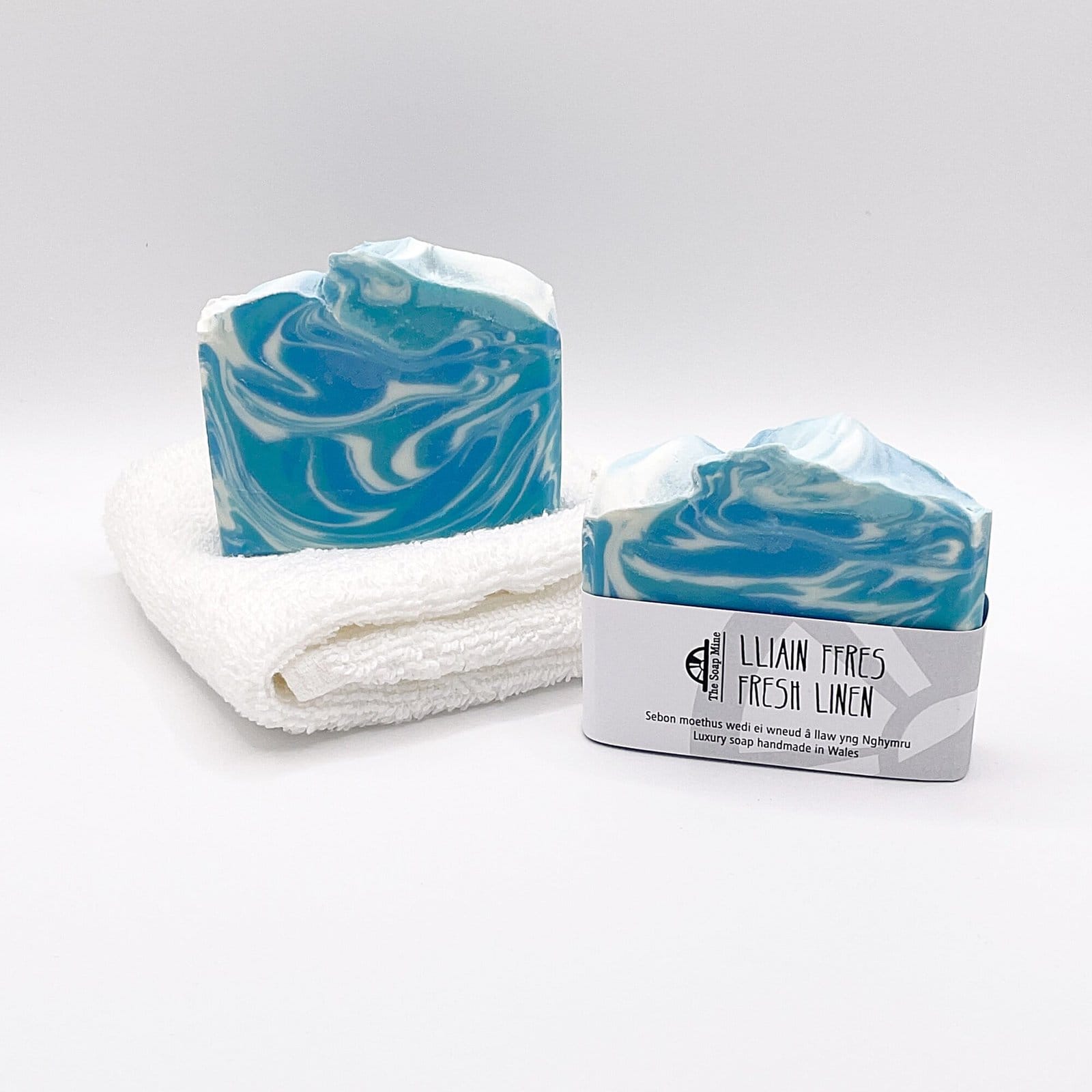
Two bars of Fresh Linen Handmade Soap
Fresh Linen Handmade Soap

Posted on — Leave a comment

Five mistakes that make a bar of soap disappear faster

Your lovely bar of soap really should give you more than three three showers and a disappointed sigh.  If yours seems to vanish at speed, check you’re not committing any of these bar soap sins…

1. Leaving it sitting in water

That little puddle beneath your soap? It’s slowly turning your bar into mush (or snot, as we call it in the trade – you know exactly what I mean!)  Give it a dish that drains properly, rather than its own private paddling pool.

2. Parking it under the shower

Even if you’re not using it, water spraying over your soap will keep washing it away. Put it somewhere the shower can’t reach because it really doesn’t need to join you for the entire performance.

3. Using a soap dish that doesn’t actually drain

A dish can look lovely and still be spectacularly bad at its one and only job. Your soap needs to sit above any collected water, with enough airflow to dry between uses. Empty and clean the dish regularly too.

4. Keeping a whole bar in a damp soap saver bag

Those little bags are brilliant for using up slivers. But a whole bar left in a wet bag can stay damp and soften faster. I recommend collecting up all those slivers towards the ends of their lives and THEN popping them in the exfoliating bag, so that you can use up every bit.

5. Rubbing the bar for the entire wash

You don’t need to keep scrubbing away at the bar once you’ve got enough lather. Lather up your hands, a washcloth or a loofah, then put the soap down (somewhere dry!!) and get on with washing. It’s allowed a tea break.

The biggest favour you can do your soap? Let it dry properly between uses.

You’ve paid for a lovely bar. Make sure you get to enjoy it before it slides down the plughole. 😉

Vicki x

Eryri Soap Bar is a wooden soap dish

Posted on — Leave a comment

Why I include a free sample in every order

A selection of soap samples
Soap Samples

Every Soap Mine order comes with a little soap sample tucked inside. It’s a small thing, but there are five very good reasons why I do it.

1. Because a little extra is always lovely

You’ve ordered soap. You’re expecting soap. But bonus soap? That’s got to make you happy 😁

2. Because you can’t smell a website

I can describe a fragrance until the cows come home, but there’s only so much “fresh, woody, with a hint of…” can tell you. Sometimes you just need a sniff.

3. Because your next favourite might surprise you

It’s easy to stick with the scents you know you love. A sample lets you try something different without committing to a whole bar. That one you’ve been scrolling past might actually be rather fabulous.

4. Because yes, I’d quite like you to come back

Let’s not pretend this is entirely selfless. 😂 If you love your sample and order a full-sized bar next time, we’re both happy. That’s a pretty good arrangement.

5. Because I appreciate every order

You have plenty of places to buy soap, and you’ve chosen mine. A little sample is one way of saying thank you for keeping this small business bubbling along.

Got your eye on something? Pop a request in the order notes and I’ll do my best to include that sample.

Vicki x

Posted on — Leave a comment

Blogtober 2026? Ahh, go on then…😬

It’s 1st October, and it seems I’ve decided to do Blogtober again. This would be a perfectly sensible idea if I had lots of spare time, nothing much going on, and the kind of organised life that allows for daily blogging.

Unfortunately, none of those things are true. 😂

The last time I did Blogtober was in 2021, and for some utterly unfathomable reason I’ve decided that five years later would be an excellent time to have another go.

So, for the next 31 days, the plan is to post something here every day.

Some posts will be about soap. Some will be about running The Soap Mine. Some will probably be little glimpses of workshop life, home life, Jac, autumn in Beddgelert, things I’ve learnt, things that have gone wrong, things I’m currently obsessed with, and whatever else happens to be going on that day.

Some posts might be useful, some might be mildly interesting and some may simply prove that I remembered to write something before going to bed.

I’m deliberately not setting myself the task of writing 31 enormous, beautifully polished blog posts because that would almost certainly result in me giving up by about the 4th October.

Instead, I’m treating this as a little diary of October 2026.

Thirty-one days of soapy life and everything in between.

Let’s see how far I get. 😬

Vicki x